
HBOT India —
what it is, where
to get it, what it costs.
HBOT in India is growing — and so is the demand for clear, evidence-based information. This guide covers every essential: what HBOT is, how it works, what the FDA recognises it for, what it costs city by city, and how to find a centre that meets medical-grade standards.
No sign-up needed · Evidence-based · Updated May 2026
Oxygen that works deeper than you think
Hyperbaric Oxygen Therapy (HBOT) is a medical treatment in which a person breathes nearly pure oxygen inside a specially designed pressurised chamber. At normal atmospheric conditions, air contains approximately 21% oxygen. Inside an HBOT chamber, both concentration and pressure rise simultaneously.
At increased pressure, oxygen dissolves directly into blood plasma, cerebrospinal fluid, and lymph — reaching tissues that red blood cells alone cannot adequately supply.
This process supports tissue repair, reduces inflammation, promotes new blood vessel growth (angiogenesis), and assists healing in conditions where standard care alone stalls.
In India, HBOT is available across major cities at hospital-based units and dedicated wellness centres. Understanding the difference between medical-grade and mild HBOT remains essential before making any decision.
How HBOT works — full explanation →Atmospheric pressure increase
Medical-grade HBOT operates at 1.5–3.0 ATA — well above normal sea-level pressure.
Oxygen concentration in the chamber
Pure medical-grade oxygen during treatment, versus 21% in ambient air.
Minutes per session
A typical HBOT session. Calm, non-invasive. No downtime needed.
Telomere lengthening in longevity research
Peer-reviewed Tel Aviv University study on HBOT and biological ageing markers.
Why HBOT is growing across Indian healthcare
India carries one of the world’s highest burdens of diabetic complications, neurological conditions, and sports injuries — three of the most evidence-supported areas for HBOT. The science has advanced significantly. Access is expanding. Patient awareness is following.
Diabetic Wound Crisis
India has over 101 million people living with diabetes (IDF, 2023). Diabetic foot ulcers are a leading cause of amputation. HBOT is a clinically validated adjunct for wounds that resist standard care.
Elite Sports Recovery
Indian athletes — from Rishabh Pant to Olympic-level competitors — are adopting HBOT for faster recovery. The clinical evidence supports it, with research demonstrating faster skeletal muscle regeneration.
Neurological Demand
Stroke, TBI, and neurological conditions affect millions of Indians annually. HBOT’s role in inducing neuroplasticity is backed by randomised controlled trials (Efrati et al., PLoS ONE, 2013).
Cancer Survivorship
Post-radiation injury affects a significant proportion of cancer survivors. HBOT is recognised as an adjunctive care option for radiation-damaged tissue — a growing patient population in India.
Longevity and Cellular Repair
As India’s urban population invests more in preventive health, HBOT’s research profile in cellular repair and biological age reversal is attracting serious attention.
Organised Access
Until recently, HBOT in India was fragmented — a few hospital units with inconsistent protocols. HBOTLAB is building India’s first organised network, bringing medical-grade access to more cities under a unified quality standard.
Where HBOT has FDA-recognised clinical use
The U.S. FDA and the Undersea and Hyperbaric Medical Society (UHMS) have formally recognised HBOT for 14 indications where clinical evidence is definitive. These are the conditions for which medical-grade HBOT is recommended as a primary or adjunctive treatment.
Gas Gangrene (Clostridial Myonecrosis)
Kaye D, Proc Soc Exp Biol Med, 1967
View research →Beyond these 14, a growing body of peer-reviewed research supports HBOT across neurological recovery, sports performance, longevity, and mental health — areas where clinical investigation continues to accelerate. Read the complete indications guide →
What does HBOT cost in India?
HBOT session costs vary by city, chamber type, and the condition being treated. The table below reflects current market pricing across major Indian cities. All figures are per-session estimates.
| City | Chamber Type | ATA Range | Est. Cost / Session | Notes |
|---|---|---|---|---|
| Delhi | Monoplace / Multiplace | 2.0–3.0 ATA | ₹7,000–₹15,000 | Apollo, Fortis, AIIMS |
| Gurgaon | Medical-grade Monoplace | 2.0–3.0 ATA | ₹6,000–₹12,000 | HBOTLAB network |
| Mumbai | Monoplace / Multiplace | 2.0–2.8 ATA | ₹8,000–₹15,000 | Hospital and wellness mix |
| Bangalore | Medical-grade Monoplace | 2.0–2.8 ATA | ₹6,000–₹12,000 | Growing centre network |
| Hyderabad | Monoplace | 2.0–2.5 ATA | ₹5,000–₹10,000 | Hospital-based |
| Chennai | Monoplace / Multiplace | 2.0–3.0 ATA | ₹5,000–₹10,000 | Oxymed Hospital |
| Tier 2 Cities | Monoplace | 1.5–2.5 ATA | ₹3,000–₹6,000 | Verify ATA before booking |
* Indicative estimates based on 2026 market data. Confirm with the centre before booking. Source: ManipalCigna Health Insurance, Vaidam, HBOTLAB network data.
Find HBOT across Indian cities
HBOT is now accessible in most major Indian cities. Use the guides below to understand centre availability, typical pricing, and what to look for in your city.
Delhi
Hospital units at AIIMS, Apollo, Fortis; dedicated centres
Gurgaon
HBOTLAB flagship; medical-grade chambers; Sector 51
Bangalore
Growing dedicated centre network; strong wellness demand
Mumbai
Hospital and standalone wellness centre options
Hyderabad
Hospital-based access; limited standalone centres
Chennai
Oxymed Hospital; established clinical HBOT units
Find HBOT Near You
Complete India-wide buyer guide
What a session typically looks like
A calm, structured experience. Most people find it restful — some fall asleep during treatment.
Check-in and Preparation
You arrive, change into cotton clothing, and a clinical team member reviews your vitals and medical history before the session.
Enter the Chamber
Lie comfortably inside the chamber with a clear hood or mask. As pressure builds gradually, your ears may pop — staff guide you through it.
Pressurisation and Treatment
Pressure rises to 1.5–3.0× normal atmospheric pressure. Breathe naturally for 60–90 minutes. Read, rest, or listen to music.
Depressurise and Finish
Pressure reduces gradually. You are assisted out and checked before leaving. No downtime needed — return to your day immediately.
What to verify before your first session
Not all HBOT centres in India are equal. The quality of the chamber, the supervision model, and the ATA pressure used determine whether your treatment delivers clinical-grade outcomes or wellness-only results.
Here is what to confirm before you book.
A centre that cannot specify the chamber ATA rating, or that operates without a qualified physician on site during sessions, does not meet medical-grade HBOT standards.
- 1
Confirm the chamber ATA rating
Medical-grade HBOT requires at minimum 2.0 ATA. Ask directly and request the chamber specification sheet.
- 2
Verify medical supervision
A qualified medical professional should be present during every session — not simply available on call.
- 3
Insist on a pre-treatment evaluation
Any credible HBOT centre requires a medical assessment before your first session.
- 4
Ask about equipment certification
The chamber should carry applicable safety certifications. Ask about the manufacturing standard and last safety inspection date.
- 5
Confirm oxygen delivery method
Medical-grade HBOT delivers near-pure oxygen via mask or hood. Pressurised ambient air alone is not HBOT.
- 6
Get a written treatment protocol
A credible centre provides a written plan specifying session count, ATA, and duration — matched to your condition.
Who should — and should not — do HBOT
HBOT is non-invasive and generally well-tolerated when delivered under proper medical supervision. A pre-treatment evaluation identifies any contraindications before treatment begins.
- Adults with any of the 14 FDA-recognised indications
- Post-radiation injury survivors (cancer care)
- Diabetic patients with non-healing wounds
- Athletes recovering from soft tissue injuries
- Neurological recovery post-stroke or TBI
- Most healthy adults pursuing wellness protocols
- Children with autism spectrum disorder (under supervision)
- Untreated pneumothorax (collapsed lung)
- Certain chemotherapy agents that sensitise to oxygen
- Active ear or sinus infection (temporary delay)
- Claustrophobia (individual assessment needed)
- Pregnancy (case-by-case clinical assessment)
- Congenital spherocytosis
- Uncontrolled high fever
Questions people ask about HBOT in India
What is HBOT and is it available in India?
What does HBOT cost in India?
How many HBOT sessions are needed?
Is HBOT covered by insurance in India?
What is the difference between mild HBOT and medical-grade HBOT?
Can HBOT help with diabetic wounds in India?
Is HBOT used for sports recovery in India?
Who should not do HBOT?
How do I find a genuine HBOT centre in India?
What is HBOTLAB?
What practitioners and experts say
When it comes to healing injuries faster, increasing oxygen delivery to damaged tissues, and causing a natural release of your own stem cells — there is nothing as powerful as HBOT.
I have personally seen the benefits HBOT offers patients and athletes from all walks of life. Whether treating an underlying condition or enhancing performance, HBOT has something for everyone.
Whenever I am feeling run down or suffering from soft tissue pains, I use HBOT to lower inflammation and recover. I highly recommend it to anyone. The research is mind-boggling.
Recent articles on HBOT in India

HBOT Near Me — India Complete 2026 Buyer Guide
How to find a genuine, medical-grade HBOT centre anywhere in India.
Read more →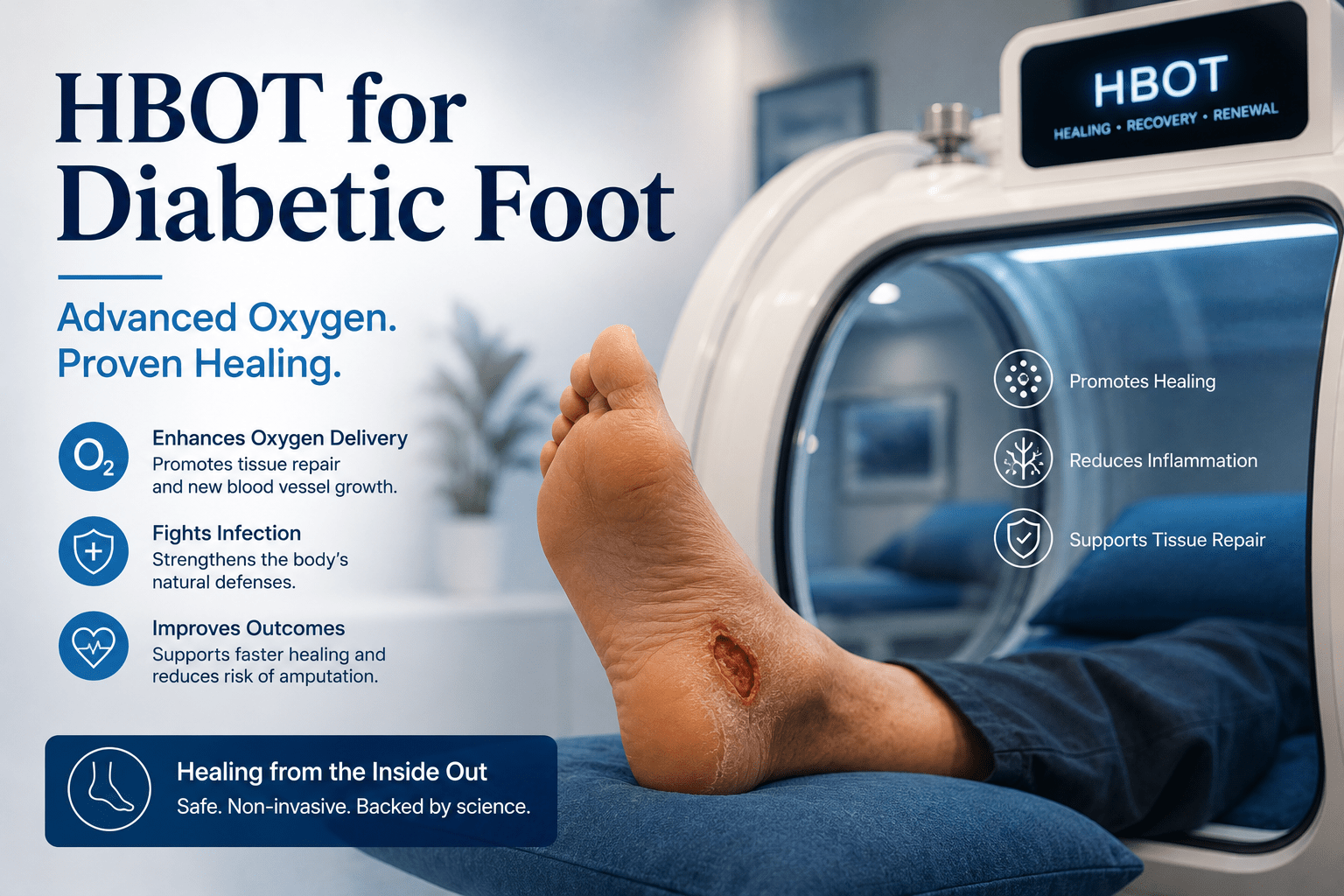
The Wound That Would Not Heal — HBOT for Diabetic Foot
How HBOT supports healing in diabetic wounds when standard care stalls.
Read more →
Why Rishabh Pant Used HBOT and What It Means for Indian Athletes
The science behind elite sports recovery and what it means for India.
Read more →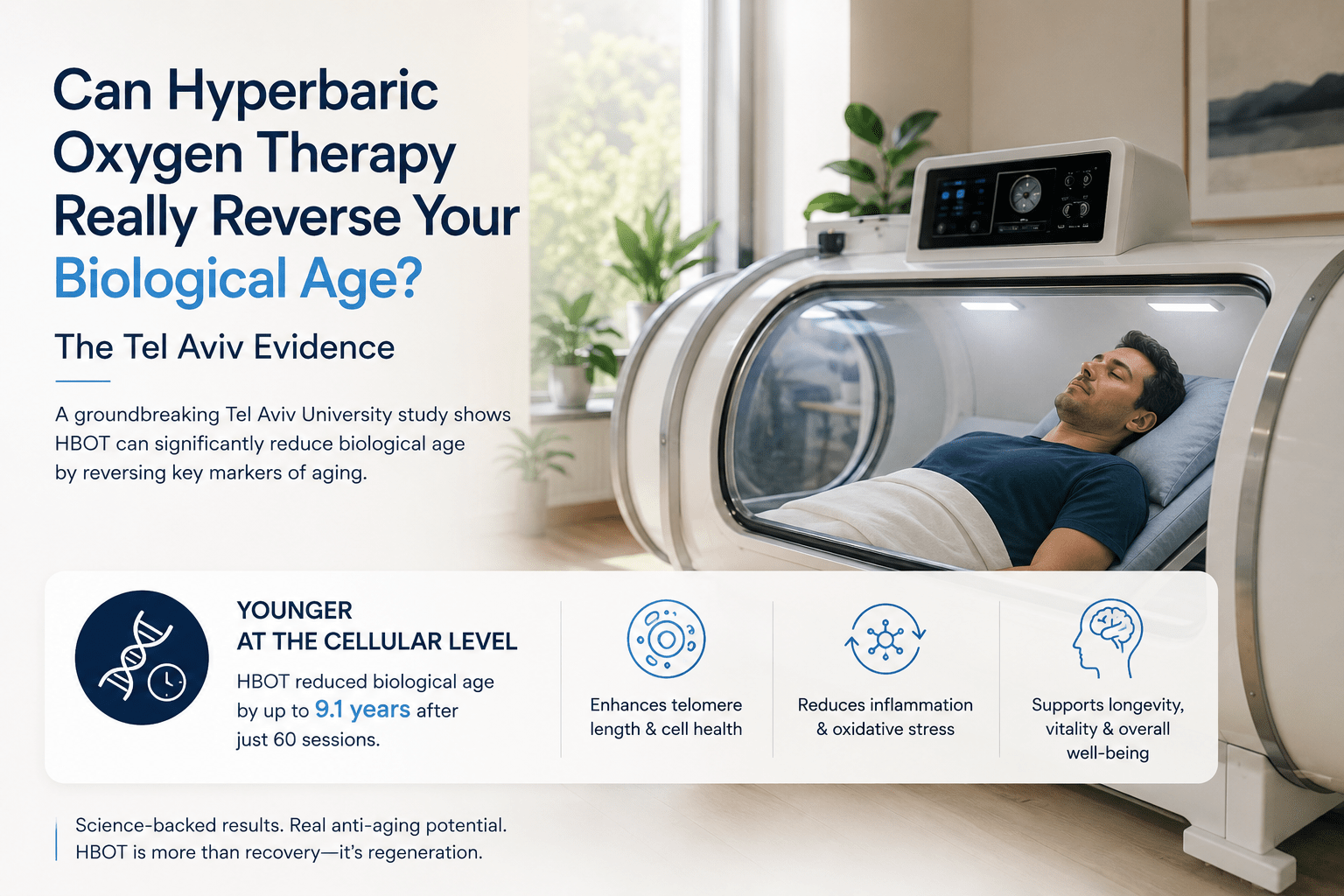
Can HBOT Reverse Biological Ageing? The Tel Aviv Evidence
Peer-reviewed telomere research and what it means for longevity seekers in India.
Read more →Ready to explore HBOT in India?
India’s first organised HBOT Authentic Unbiased Knowledge hub — bringing medical-grade hyperbaric oxygen therapy to patients and clinics under a unified quality standard.