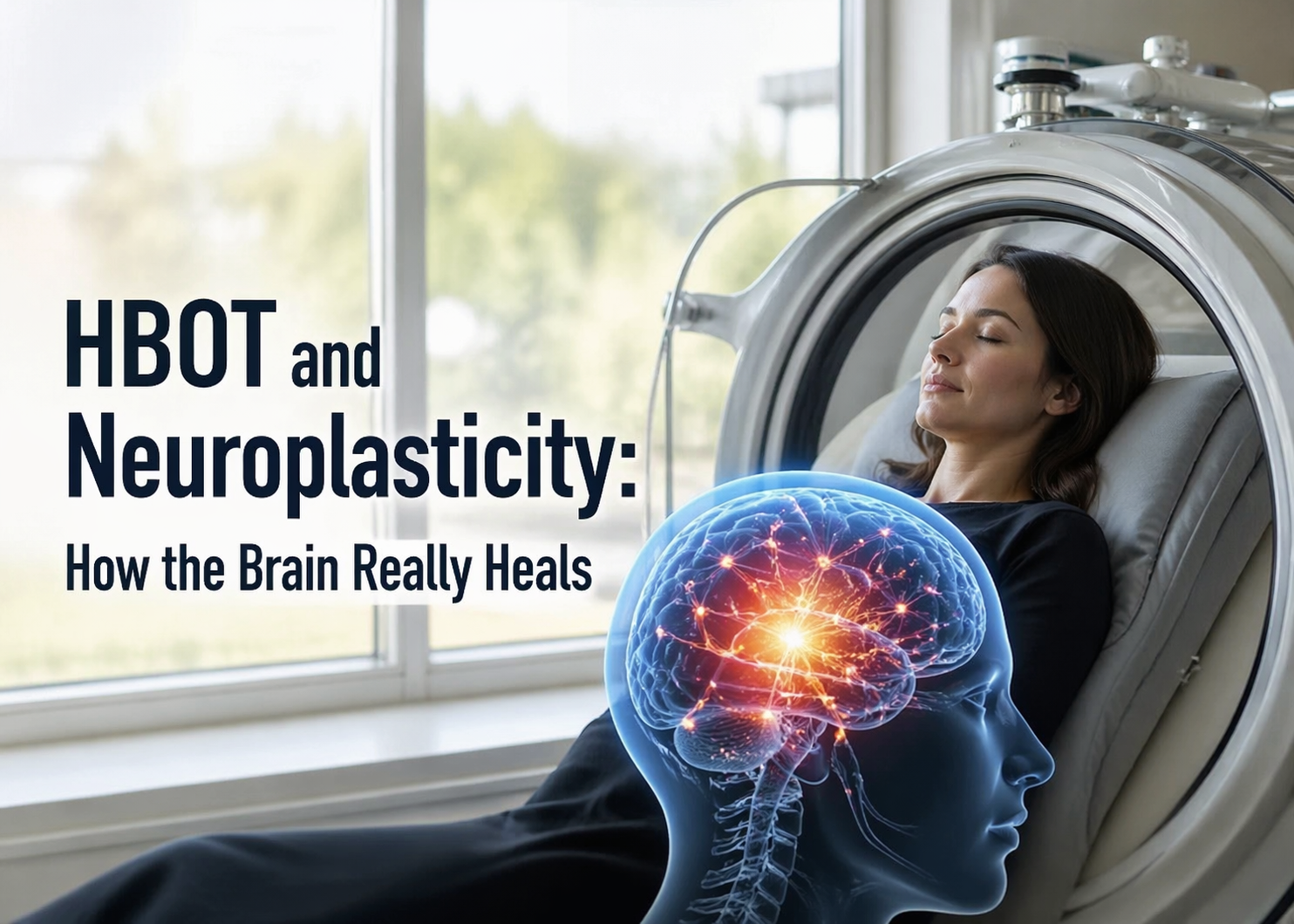
HBOT and Neuroplasticity: How the Brain Really Heals
The human brain is far more adaptable than once believed. For decades, scientists assumed that once brain cells were damaged, recovery was limited and often permanent. That belief has shifted dramatically. The brain has an incredible ability to reorganize, repair, and form new neural connections—a process known as neuroplasticity.
At the intersection of advanced medical science and natural healing lies a powerful approach gaining attention: HBOT and Neuroplasticity. Hyperbaric Oxygen Therapy (HBOT) is redefining how clinicians, therapists, and researchers approach brain recovery, especially in conditions involving trauma, stroke, and cognitive decline.
At HBOTLAB, this approach is not viewed as a trend, but as a scientifically grounded method that supports the brain’s inherent ability to heal itself.
What Is Neuroplasticity?
Neuroplasticity refers to the brain’s ability to adapt by forming new neural pathways. This ability allows individuals to recover from injuries, learn new skills, and regain lost cognitive functions.
When a part of the brain is damaged, other areas can sometimes compensate. Neurons can reorganize, strengthen connections, and even form entirely new networks. This flexibility is the foundation of rehabilitation in neurological conditions.
However, neuroplasticity does not operate in isolation. It depends on several factors:
- Oxygen supply to brain tissue
- Blood flow and vascular health
- Cellular energy production
- Inflammation levels
- Presence of growth factors
Without optimal conditions, the brain’s healing capacity slows down significantly.
What Is Hyperbaric Oxygen Therapy (HBOT)?
HBOT involves breathing pure oxygen in a pressurized environment. This process increases the amount of oxygen dissolved in the blood, allowing it to reach areas with reduced circulation or damage.
Under normal conditions, oxygen transport depends heavily on red blood cells. During HBOT, oxygen dissolves directly into plasma, reaching tissues that might otherwise remain deprived.
This enhanced oxygen delivery plays a crucial role in supporting HBOT and Neuroplasticity, especially in compromised brain regions.
The Science Behind HBOT and Neuroplasticity
The connection between HBOT and neuroplasticity lies in cellular repair and regeneration. Oxygen is not just a survival element—it acts as a catalyst for healing processes at the microscopic level.
1. Activation of Dormant Neurons
In many brain injuries, not all affected neurons are dead. Some remain inactive due to lack of oxygen and nutrients. HBOT helps “wake up” these dormant cells by restoring oxygen supply.
2. Angiogenesis (New Blood Vessel Formation)
HBOT stimulates the growth of new blood vessels. This improves circulation in damaged areas, ensuring a steady supply of oxygen and nutrients essential for neural repair.
3. Reduction of Inflammation
Chronic inflammation can block neural recovery. HBOT has been shown to reduce inflammatory markers, creating a more favorable environment for neuroplastic changes.
4. Stem Cell Mobilization
Exposure to hyperbaric oxygen can trigger the release of stem cells from bone marrow. These cells migrate to injured areas and contribute to tissue repair.
5. Enhanced Mitochondrial Function
Mitochondria generate energy for cellular activity. HBOT improves mitochondrial efficiency, providing neurons with the energy required to rebuild and form new connections.
Clinical A
pplications of HBOT in Brain Recovery
The integration of HBOT and Neuroplasticity has opened new possibilities across various neurological conditions.
Stroke Rehabilitation
Stroke often leads to loss of motor and cognitive functions due to interrupted blood flow. HBOT helps restore oxygen levels in affected brain regions, promoting recovery through neuroplastic adaptation.
Traumatic Brain Injury (TBI)
TBI patients frequently experience long-term symptoms such as memory loss, fatigue, and emotional instability. HBOT supports tissue repair and enhances neural connectivity, improving quality of life.
Autism Spectrum Disorders
Emerging research suggests that HBOT may improve social interaction and communication by enhancing brain metabolism and reducing inflammation.
Cerebral Palsy
Children with cerebral palsy may benefit from improved motor control and cognitive function through consistent HBOT sessions.
Age-Related Cognitive Decline
As the brain ages, oxygen supply and vascular efficiency decline. HBOT helps counteract these effects, supporting memory, focus, and overall cognitive performance.
How HBOT Enhances Cognitive Performance
Beyond injury recovery, HBOT and Neuroplasticity also play a role in optimizing brain function for healthy individuals.
1. Improved Focus and Clarity
Increased oxygen availability enhances brain activity, leading to better concentration and mental clarity.
2. Memory Enhancement
Neuroplasticity strengthens neural pathways associated with memory retention and recall.
3. Mental Fatigue Reduction
HBOT helps combat brain fog by improving energy production at the cellular level.
4. Emotional Stability
Balanced oxygen levels and reduced inflammation contribute to better mood regulation.
The Role of Consistency in HBOT Outcomes
Neuroplasticity is not an instant process. It requires repetition, stimulation, and time. HBOT works best when integrated into a structured treatment plan.
At HBOTLAB, protocols are designed to maximize the synergy between oxygen therapy and the brain’s adaptive mechanisms. Regular sessions create cumulative effects, reinforcing neural repair and strengthening new pathways.
Safety and Considerations
HBOT is generally considered safe when administered under professional supervision. However, it is not a one-size-fits-all solution.
Important considerations include:
- Medical history evaluation
- Proper chamber pressure settings
- Session duration and frequency
- Monitoring for rare side effects such as ear discomfort
Working with experienced providers ensures that the therapy is both effective and safe.
What Makes HBOTLAB Different?
At HBOTLAB, the focus extends beyond treatment sessions. The approach integrates science, personalization, and measurable outcomes.
Individualized Protocols
Each brain is unique. Treatment plans are tailored based on specific conditions and recovery goals.
Advanced Technology
State-of-the-art hyperbaric chambers ensure precise oxygen delivery and patient comfort.
Evidence-Based Practice
Protocols are grounded in clinical research, aligning with the latest findings in HBOT and Neuroplasticity.
Holistic Support
Therapy is often complemented with cognitive exercises, nutrition strategies, and lifestyle recommendations to enhance results.
Realistic Expectations: What Recovery Looks Like
While HBOT offers promising outcomes, expectations should remain grounded in science. Recovery varies based on:
- Severity of the condition
- Duration since injury
- Age and overall health
- Consistency of treatment
Some individuals experience noticeable improvements within weeks, while others require longer durations. Neuroplasticity unfolds gradually, often revealing progress in subtle but meaningful ways.
The Future of Brain Healing
The relationship between HBOT and Neuroplasticity continues to evolve as research expands. New studies are exploring its role in conditions such as Alzheimer’s disease, PTSD, and even peak cognitive performance for professionals.
What stands out is the shift in perspective: the brain is no longer seen as a static organ, but as a dynamic system capable of renewal under the right conditions.
Final Thoughts
The brain’s ability to heal is real, measurable, and far more powerful than previously believed. With the support of advanced therapies like HBOT, that potential can be activated in ways that were once considered impossible.
HBOT and Neuroplasticity represent a convergence of biology and technology—where oxygen becomes more than a basic necessity and transforms into a therapeutic tool for regeneration.
At HBOTLAB, this philosophy drives every treatment approach: enabling the brain to do what it was designed to do—adapt, repair, and thrive.