HBOT Before and After: What to Realistically Expect Across Conditions
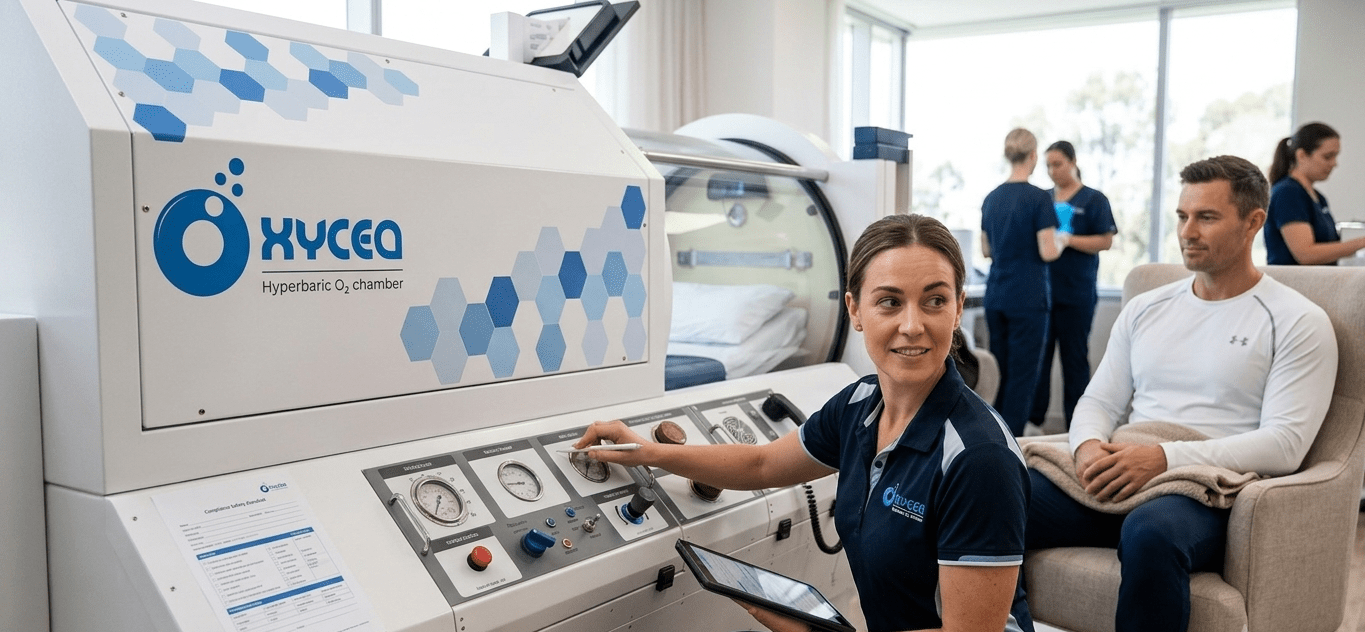
| IMAGE BLOCK 1 — Hero File name: hbot-before-and-after-results-conditions-india-guide.jpg Alt text: hbot before and after results conditions India realistic expectations patient guide Caption: HBOT before and after — realistic results across wound healing, stroke recovery, TBI, skin health and brain function. Compress: Under 100KB Placement: After H1, before first paragraph |
|---|
| IMAGE BLOCK 2 — Timeline File name: hbot-results-timeline-sessions-conditions-chart.jpg Alt text: hbot results timeline sessions conditions wound healing stroke TBI skin brain Caption: HBOT results timeline — when to expect changes across different conditions and how session count maps to outcome. Compress: Under 100KB Placement: After the condition-by-condition results table |
|---|
[ INSERT HERO IMAGE — hbot-before-and-after-results-conditions-india-guide.jpg ]
The question people ask most before starting HBOT is not about the mechanism or the cost. It is about what actually changes.
Searching for HBOT before and after results online mostly turns up promotional before-and-after photos — which are difficult to evaluate and easy to cherry-pick. What patients deserve is an honest account of what changes, how quickly, and what the research actually measures.
This guide covers realistic outcomes across the conditions where HBOT has the most evidence — with reference to the studies that measured them and the timelines patients can realistically expect.
The Key Principle: HBOT Results Are Cumulative, Not Immediate
HBOT does not produce dramatic change in one session. The mechanisms that generate benefit — angiogenesis, collagen synthesis, neuroplasticity, anti-inflammatory signalling — operate on biological timescales. They accumulate across sessions.
This matters because people who expect rapid visible change are often disappointed — not because HBOT is not working, but because they are looking at the wrong timeframe. The right question is not 'how do I feel after session one?' but 'what has changed after session 20?'
HBOT Before and After — Condition by Condition
| Condition | Typical sessions | When changes begin | What is measured | Evidence source |
|---|---|---|---|---|
| Diabetic wound healing | 20–40 | Sessions 10–15 | Wound size reduction, tissue granulation, healing rate | Health Quality Ontario 2017 |
| Stroke recovery | 40–60 | Sessions 20–30 | Motor function, cognitive scores, daily living ability | Efrati S et al, PLoS ONE 2013 |
| TBI / post-concussion | 40–60 | Sessions 20–40 | Cognitive test scores, symptom burden, quality of life | Boussi-Gross 2013 |
| PTSD / depression (TBI-associated) | 40 | Sessions 15–25 | PTSD checklist scores, depression ratings, sleep | Harch PG 2017 |
| Sudden hearing loss (SSHL) | 10–20 | Sessions 1–5 (acute phase) | Pure tone audiometry, word recognition | ENT clinical guidelines |
| Autism (ASD support) | 40 | Sessions 20–40 | CARS, ABC, language, social interaction scores | Rossignol 2009 RCT |
| Skin rejuvenation | 10–20 | Sessions 8–12 | Skin texture, tone, collagen density (observational) | Bhutani S 2012 (extrapolated) |
| Sports recovery | 5–10 | Sessions 3–5 | Soreness reduction, return-to-training time | Oyaizu T 2018 |
| Cognitive enhancement | 20–40 | Sessions 15–20 | Multitasking performance, cognitive test scores | Vadas D 2017 |
[ INSERT IMAGE — hbot-results-timeline-sessions-conditions-chart.jpg ]
What Wound Healing Looks Like Before and After HBOT
This is where the most objective and measurable HBOT before/after data exists. In diabetic foot ulcer studies, HBOT consistently produces measurable wound size reduction, improved tissue granulation, and reduced bacterial load compared to control groups.
Health Quality Ontario's 2017 Health Technology Assessment found that HBOT significantly improved healing in wounds that had failed to respond to standard care. In practical terms: wounds that had been static for weeks or months begin to show measurable closure within 10–20 sessions.
For the full wound healing picture, read our hyperbaric oxygen therapy benefits guide.
What Neurological Recovery Looks Like Before and After HBOT
Stroke patients
Efrati S et al (PLoS ONE, 2013) used SPECT imaging to document brain changes before and after 40 HBOT sessions in post-stroke patients. The imaging showed increased activity in previously dormant regions — and the clinical changes followed the imaging: improved motor function, sensory recovery, and cognitive performance. Improvements documented at session 40 were maintained at follow-up.
Read more: HBOT and stroke recovery.
TBI / post-concussion patients
Boussi-Gross R et al (PLoS ONE, 2013) enrolled patients with chronic post-concussion syndrome — people who had been symptomatic for an average of 16 months since their TBI. After 60 sessions, patients showed significant improvement on cognitive tests, symptom burden scales, and quality of life measures. Many patients who had been functionally limited for over a year returned to work or normal daily function.
Read more: HBOT and traumatic brain injury.
What Skin and Appearance Changes Look Like Before and After HBOT
Skin changes from HBOT are gradual and most visible from session 10 onward. Patients typically report improved skin tone and texture first, followed by reduced scar prominence and improved skin elasticity. These changes are driven by the collagen synthesis and angiogenesis that HBOT stimulates — processes that operate on a 6–12 week biological timeline.
For post-procedure skin use — after laser resurfacing or chemical peels — patients typically notice reduced redness and faster resolution of downtime within 3–5 sessions.
For the detailed skin evidence, read our HBOT for skin and collagen article.
What to Look For in a Provider — Before You Start
The quality of HBOT before and after outcomes depends entirely on the quality of the chamber and protocol. Before starting any protocol:
- Confirm a PVHO-certified hard chamber is in use — The results documented in research came from pressure vessels for human occupancy meeting ASME PVHO standards at 2.0 ATA or above. Soft portable chambers at 1.3 ATA do not replicate these outcomes.
- Ask for a baseline assessment — Before session one, your condition, symptoms, or functional status should be documented. Without a baseline, there is no way to objectively measure what has changed.
- Agree on a midpoint review — At session 20, schedule a review against baseline. This tells you whether the protocol is producing the expected change and whether it should continue.
For PVHO certification see PVHO chamber safety in India. For session cost see HBOT session cost in India. To find a clinic see find a certified HBOT clinic near you.
Frequently Asked Questions
How quickly does HBOT work?
It depends on the condition. Sudden hearing loss responds fastest — changes can occur within the first 5 sessions if treatment starts within 72 hours. Sports recovery benefits appear within 3–5 sessions. Wound healing changes begin at 10–15 sessions. Neurological improvements from stroke and TBI protocols typically begin at session 20 and accumulate through session 40–60.
How many sessions before HBOT results are visible?
For most conditions, visible or measurable change begins at session 10–20. Skin improvement is typically visible from session 10. Cognitive and neurological changes often begin around session 20. Wound healing produces measurable area reduction from session 10–15 onward.
Do HBOT results last?
Research shows that HBOT-induced neuroplasticity and wound healing improvements are durable. Efrati et al's 2013 stroke trial showed improvements maintained at follow-up. Boussi-Gross et al's 2013 TBI study showed sustained cognitive improvement. Angiogenesis — new blood vessel formation — is a structural change that persists.
Can results vary between individuals?
Yes. Individual response to HBOT varies based on the severity of the condition, the patient's baseline health, the protocol used, and the chamber quality. This is why PVHO-certified chambers and documented protocols matter — they give you the best possible conditions for consistent outcomes.
What if I don't see results after HBOT?
If measurable improvement is not apparent at session 20 midpoint review, the protocol should be reassessed. Not every patient responds to every intervention. A responsible clinic will document baseline function, track progress, and give you an honest assessment at the midpoint.