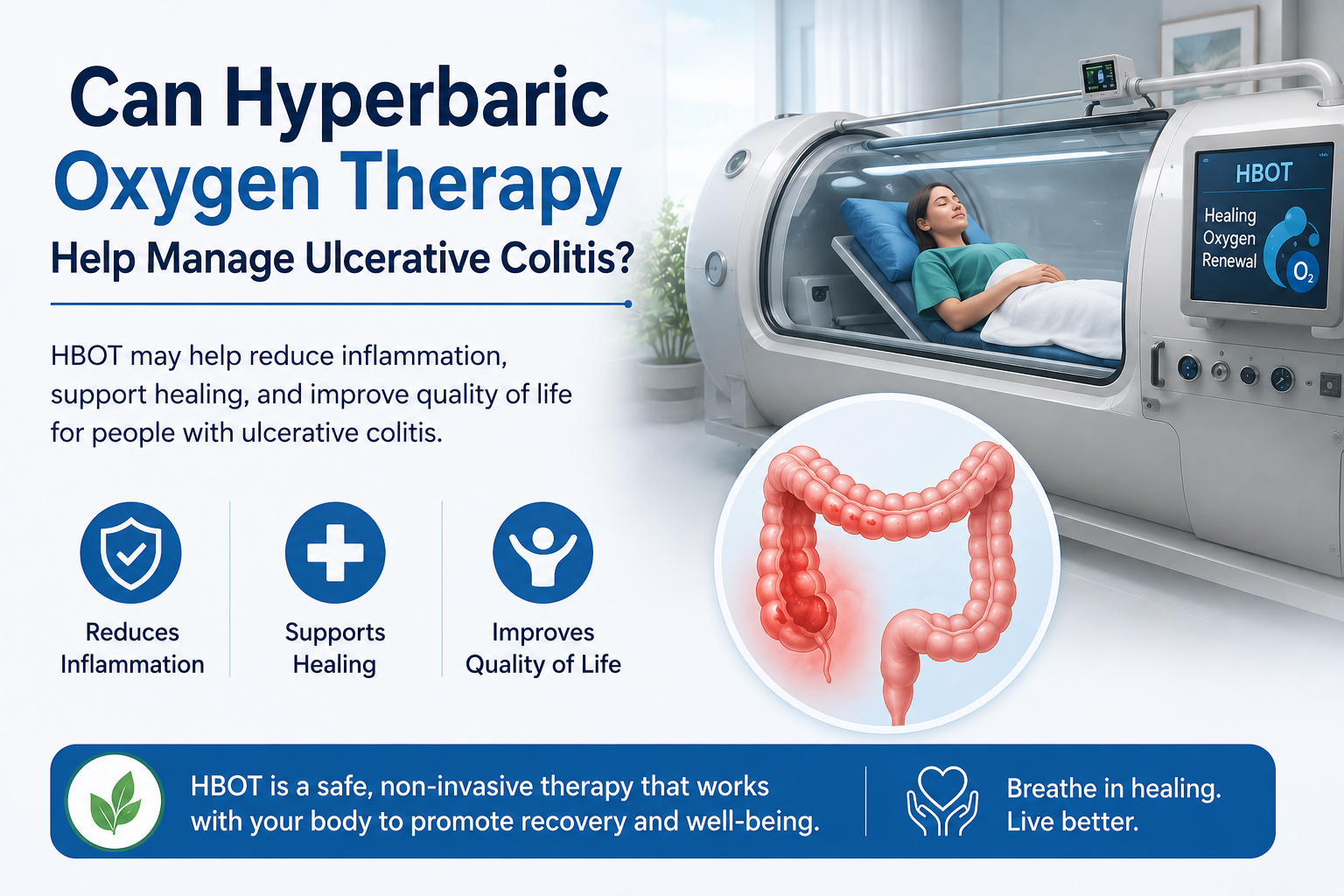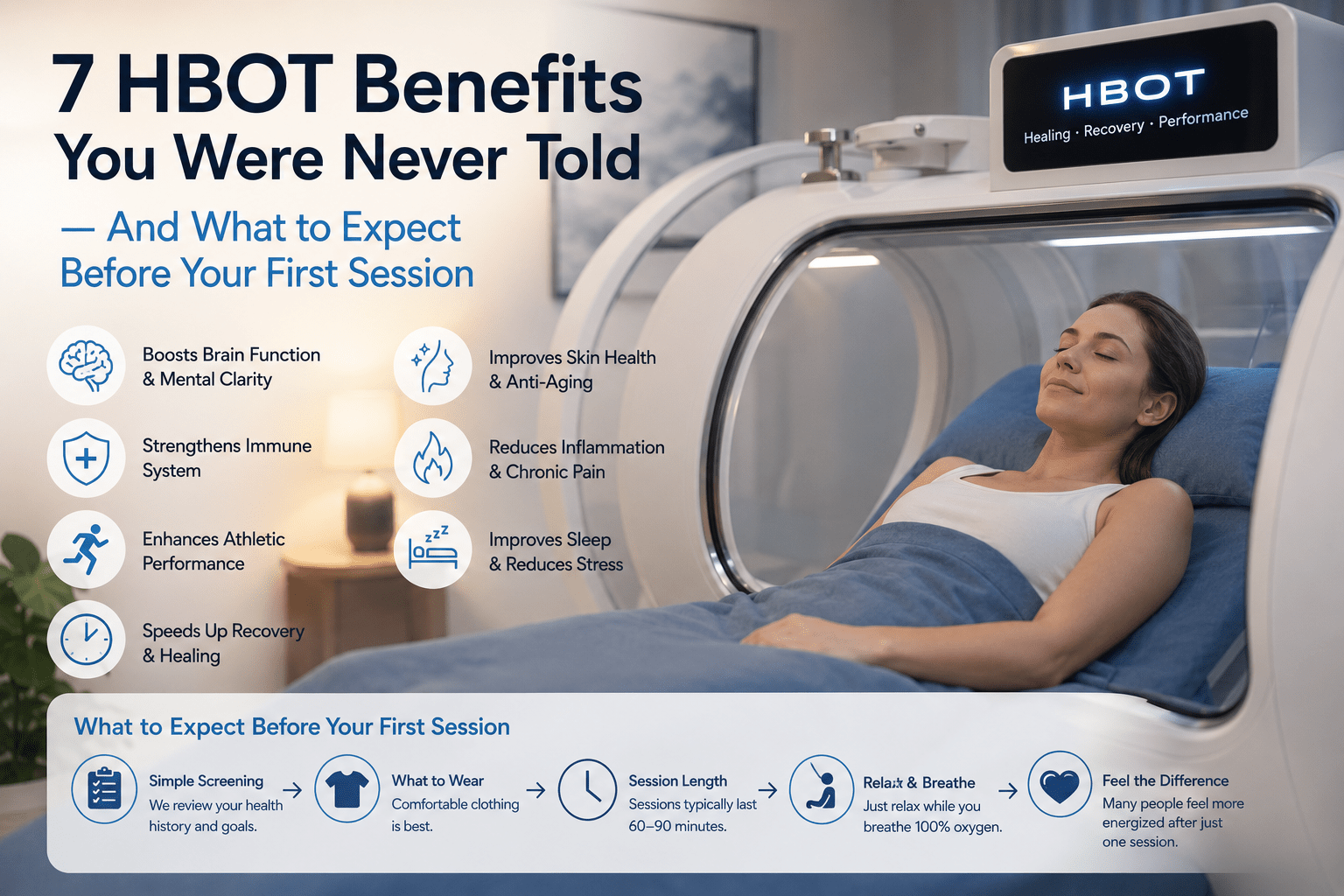

HBOT for Tinnitus: Does Hyperbaric Oxygen Therapy Help Ringing in the Ears?
Persistent ringing, buzzing or hissing in the ears — tinnitus — is exhausting, and it is natural to search for options. Some people ask whether hyperbaric oxygen therapy can help. Here is an honest look at where HBOT may have a role, where the evidence is weak, and what to do first.
If your tinnitus is recent, tell us — timing changes the options. Free, no obligation.
📞 Call +91 98219 94283💬 WhatsApp usBook consultation →What is hyperbaric oxygen therapy?
Hyperbaric oxygen therapy (HBOT) means breathing near-100% oxygen inside a pressurised chamber, usually around 2.0 ATA. At that pressure far more oxygen dissolves into the blood plasma and reaches tissues a normal breath cannot — the basis for its use in healing and recovery. For the full picture, see our hyperbaric oxygen therapy guide and how a hyperbaric chamber works.
Understanding tinnitus
Tinnitus is the perception of sound with no external source. It is a symptom rather than a disease, and it can arise from noise exposure, ageing, ear-canal or middle-ear problems, circulation issues, certain medications, or an inner-ear (cochlear) injury. Because the cause varies so much, the right treatment varies too — which is why identifying the cause matters more than chasing any single therapy.
Can HBOT help tinnitus? What the evidence shows
The evidence is limited. Most research on HBOT and the ear has focused on tinnitus that appears alongside sudden sensorineural hearing loss, where early treatment has a stronger rationale. For long-standing, chronic tinnitus without a recent hearing event, independent systematic reviews have not found convincing evidence that HBOT reliably reduces the tinnitus itself.
Where HBOT is most plausible is early — when tinnitus is recent and linked to a sudden vascular or hypoxic injury to the inner ear. As a general rule, the longer tinnitus has been present, the less likely any oxygen-based approach is to change it.
Why oxygen is even considered for the ear
The cochlea is one of the most oxygen-hungry structures in the body and depends on a delicate blood supply. When tinnitus follows a sudden hypoxic insult, raising inner-ear oxygenation is the logic behind trying HBOT — see how HBOT works. For established, chronic tinnitus, that logic is much weaker because the underlying injury is no longer acute.
What to consider before trying HBOT for tinnitus
See an ENT specialist first to identify the cause, because treatment depends on it. HBOT is most reasonable when tinnitus is recent and linked to sudden hearing loss — in which case you should act quickly rather than wait. For chronic tinnitus, keep expectations realistic and remember that evidence-based approaches such as sound therapy, hearing aids where appropriate, and cognitive behavioural therapy often do more to reduce distress than HBOT is likely to.
Who should be cautious
Anyone with certain untreated ear or sinus conditions needs individual assessment before HBOT, since pressure changes affect the ears directly. And if a clinic guarantees to “cure” chronic tinnitus with oxygen, that promise is not supported by the evidence.
Practical next steps
If your tinnitus is new, treat it with the same urgency as a possible hearing problem — book an ENT assessment quickly, especially if it began suddenly or came with hearing change or dizziness. If it is long-standing, ask about a structured management plan first: a hearing assessment, sound enrichment, sleep and stress support, and cognitive behavioural therapy, all of which have better evidence than HBOT for reducing tinnitus distress. If, after that, you and your ENT agree that an early trial of HBOT is reasonable for a recent, hypoxic-type case, choose a certified centre and set a clear point at which you will review whether it is helping.
Key takeaways
- Evidence is limited, especially for long-standing (chronic) tinnitus.
- HBOT is most plausible early, when tinnitus follows sudden hearing loss.
- See an ENT specialist first to identify the cause — treatment depends on it.
- Sound therapy and CBT have better evidence for chronic tinnitus distress.
How HBOT fits with standard care
Wherever HBOT is used for a neurological or ENT condition, it is best thought of as a complementary, adjunctive option — something that may support recovery alongside the treatment your specialist prescribes, not a replacement for it. Continue your prescribed medicines and therapies, keep your treating doctor informed, and agree clear, measurable goals and a review point before you start. That way you can judge honestly whether HBOT is adding anything for you.
Choosing a centre safely
If you do proceed, insist on a PVHO-certified hard chamber operating at a genuine clinical pressure, with trained supervision and transparent pricing. A mild soft chamber at ~1.3 ATA is a different, gentler category. See hard chamber vs soft chamber, PVHO chamber safety and is HBOT safe. To find an option near you, use our HBOT near me hub.
Frequently asked questions
Can HBOT cure tinnitus?
There is no strong evidence that HBOT cures chronic tinnitus. It has mainly been studied for tinnitus linked to sudden hearing loss, where early treatment has more rationale.
Does HBOT work for chronic (long-standing) tinnitus?
Systematic reviews have not found convincing evidence that HBOT reliably improves long-standing tinnitus. The longer it has been present, the less likely HBOT is to help.
When is HBOT most likely to help tinnitus?
When tinnitus is recent and accompanies sudden sensorineural hearing loss, and treatment is started early. See an ENT specialist promptly in that situation.
What should I do first if I have tinnitus?
See an ENT specialist to find the cause. Treatment depends on it, and some causes are very treatable. HBOT is only one option and only for specific situations.
Are there better-proven options for chronic tinnitus?
Yes. Sound therapy, hearing aids where appropriate, and cognitive behavioural therapy have better evidence for reducing tinnitus distress than HBOT.
Is HBOT safe for tinnitus patients?
In a certified chamber under supervision it is generally safe; temporary ear pressure is the most common effect and is managed with simple equalising techniques.
This page is for education and is not medical advice. HBOT is a complementary therapy for the conditions discussed here and should support — never replace — treatment prescribed by your doctor. Always consult a qualified specialist before starting.