HBOT vs Ozone Therapy, Oxygen Concentrator & EWOT: How They Compare
“Oxygen therapy” covers very different things. If you are comparing HBOT vs ozone therapy, oxygen concentrators or EWOT, this guide explains what each actually is, how they differ, and which makes sense for what — without the hype.
Confused by the options? We’ll explain what fits your goal. Free, no obligation.
📞 Call +91 98219 94283💬 WhatsApp usBook consultation →What is hyperbaric oxygen therapy?
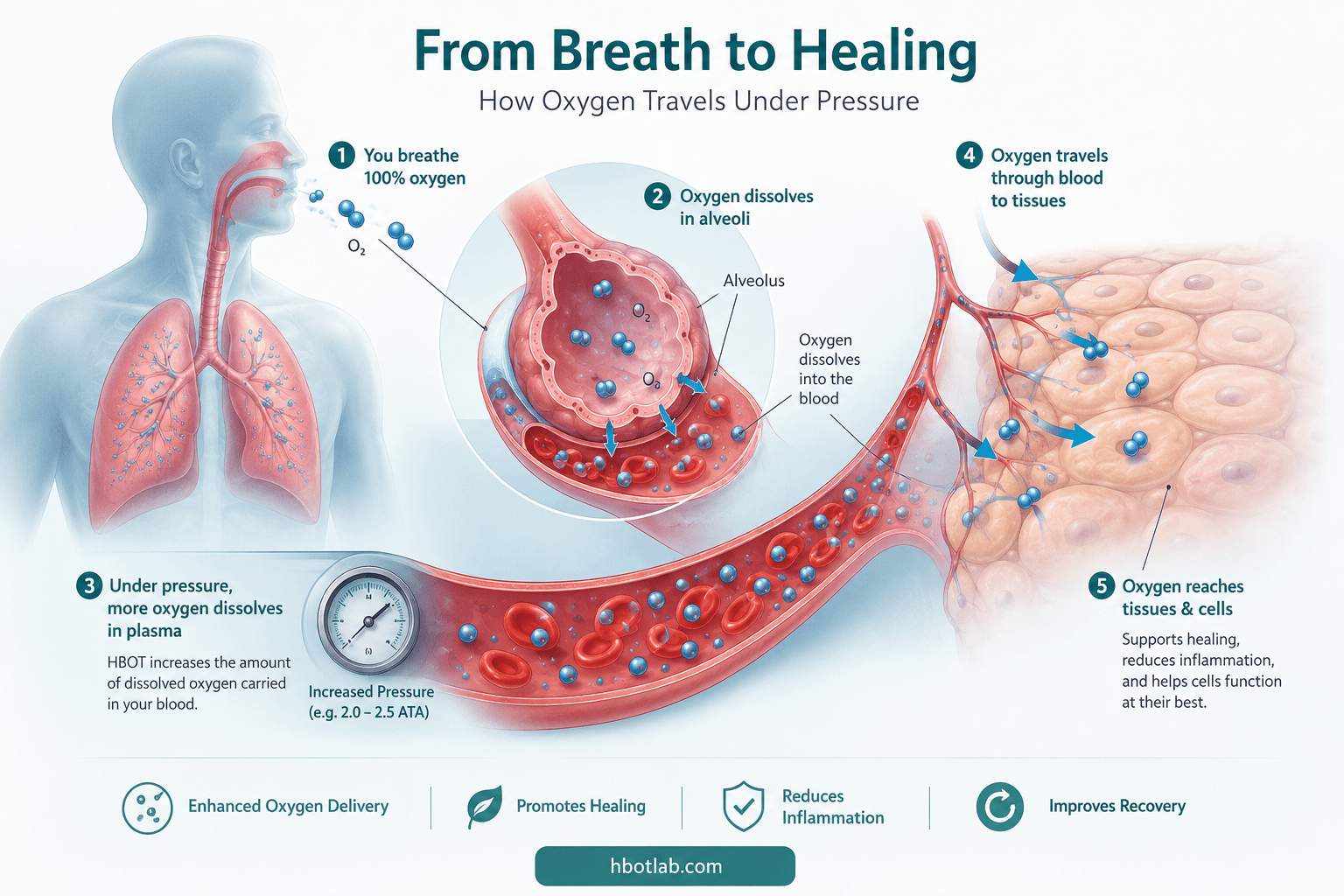
Hyperbaric oxygen therapy (HBOT) means breathing near-100% oxygen inside a pressurised chamber, usually around 2.0 ATA. At that pressure far more oxygen dissolves into the blood plasma and reaches tissues a normal breath cannot. For the full picture, see our hyperbaric oxygen therapy guide and hyperbaric chamber guide.
HBOT vs ozone therapy vs oxygen concentrator vs EWOT
| Approach | What it is | Typical use | Evidence |
|---|---|---|---|
| HBOT | 100% oxygen inside a pressurised chamber (~2.0 ATA) | Recognised medical indications; adjunctive recovery | Established for defined conditions |
| Ozone therapy | Medical ozone (O₃) given via various routes | Alternative/complementary uses | Limited and controversial; not a standard treatment |
| Oxygen concentrator | Device delivering concentrated oxygen at normal pressure | Home oxygen for low blood-oxygen conditions | Not the same as HBOT; no pressure effect |
| EWOT | Exercise while breathing high-flow oxygen at normal pressure | Fitness/wellness | Limited evidence; not medical HBOT |
The key difference: pressure
What makes HBOT distinct is pressure. Only HBOT combines near-100% oxygen with raised atmospheric pressure, which forces far more oxygen to dissolve into the blood plasma and reach tissues. An oxygen concentrator or EWOT delivers oxygen at normal pressure, so it cannot reproduce that effect. Ozone therapy is a different substance (ozone, not just oxygen) delivered in different ways.
HBOT vs ozone therapy
These are often confused but are not the same. HBOT uses pure oxygen under pressure and has an established role for specific medical conditions. Ozone therapy uses medical ozone and remains limited and controversial in the evidence, and is not a recognised standard treatment for the conditions HBOT addresses. If your goal is an evidence-based, recognised indication, HBOT is the better-supported option.
HBOT vs oxygen concentrator
An oxygen concentrator is a valuable device for people with chronically low blood oxygen, but it works at ordinary pressure and does not deliver the dissolved-oxygen boost that defines HBOT. They serve different purposes and are not interchangeable.
Which is right for you?
If you are exploring oxygen for a recognised medical indication or supervised recovery, HBOT in a PVHO-certified chamber is the option with the clearest evidence. For general wellness, be cautious and evidence-led. Whatever you choose, avoid providers making dramatic, guaranteed claims. Learn how to judge a chamber in hard vs soft chamber, and start with our hyperbaric oxygen therapy guide.
For more on safety, see is HBOT safe and HBOT side effects. Insist on a PVHO-certified hard chamber — see hard vs soft chamber — and find a centre via HBOT near me.
Common myths and mix-ups
Because all of these involve “oxygen”, they are easily confused — and marketing sometimes blurs the lines on purpose. A soft (mild) chamber at ~1.3 ATA is not the same as medical-grade HBOT, even though both are called “hyperbaric”. An oxygen bar or an oxygen concentrator does not pressurise you, so it cannot reproduce HBOT's effect. And ozone is a different molecule from the oxygen you breathe in HBOT, delivered in different ways with a very different evidence base. The practical rule: if a claim sounds dramatic or guaranteed, ask what pressure is used, what the substance actually is, and what evidence supports it for your specific goal.
When you compare options, keep the goal in front of you: an evidence-based medical indication points clearly toward properly delivered HBOT, while general wellness curiosity calls for caution and realistic expectations whatever the method. If a provider cannot explain, in plain terms, what their device does and what evidence supports it for your situation, that is reason enough to look elsewhere.
Finally, do not assume “more oxygen” is automatically better or safer. Each approach has its own risks, costs and appropriate uses, and the right choice depends entirely on your goal and health. The most reliable path is to start from the outcome you want, check what the evidence says for that specific outcome, and choose the method — if any — that genuinely fits, rather than the one that is marketed most loudly.
Key takeaways
- Only HBOT combines pure oxygen with raised pressure — that is the key difference.
- Oxygen concentrators and EWOT work at normal pressure and cannot reproduce HBOT.
- Ozone therapy uses a different molecule with limited, controversial evidence.
- For recognised medical indications, HBOT is the best-supported option.
Frequently asked questions
What is the difference between HBOT and ozone therapy?
HBOT uses 100% oxygen under pressure and is established for specific medical conditions. Ozone therapy uses medical ozone, is delivered differently, and its evidence is limited and controversial.
Is HBOT the same as an oxygen concentrator?
No. An oxygen concentrator delivers oxygen at normal pressure. HBOT adds raised pressure, which forces far more oxygen into the blood — an effect a concentrator cannot reproduce.
HBOT vs EWOT: what is the difference?
EWOT means exercising while breathing high-flow oxygen at normal pressure. It lacks the pressure element of HBOT and has limited evidence; it is not medical hyperbaric therapy.
Which is better, HBOT or ozone therapy?
For recognised medical indications, HBOT is far better supported by evidence. Ozone therapy is not a standard treatment for those conditions.
Can I use an oxygen concentrator instead of HBOT?
Not for the same purpose. They do different things; a concentrator treats low blood oxygen at normal pressure, while HBOT provides pressurised oxygen for healing and recovery.
Is ozone therapy safe and effective?
Ozone therapy’s evidence is limited and it carries its own risks. Discuss any alternative therapy with a qualified doctor before considering it.
This page is for education and is not medical advice. Always consult a qualified clinician before starting HBOT.