

HBOT Near Me in India: The Complete 2026 Buyer’s Guide
“The Indian HBOT market is not broken. It is young, unregulated, and growing fast. The buyers who understand the standard before the regulation arrives will always make better decisions than those who wait.”
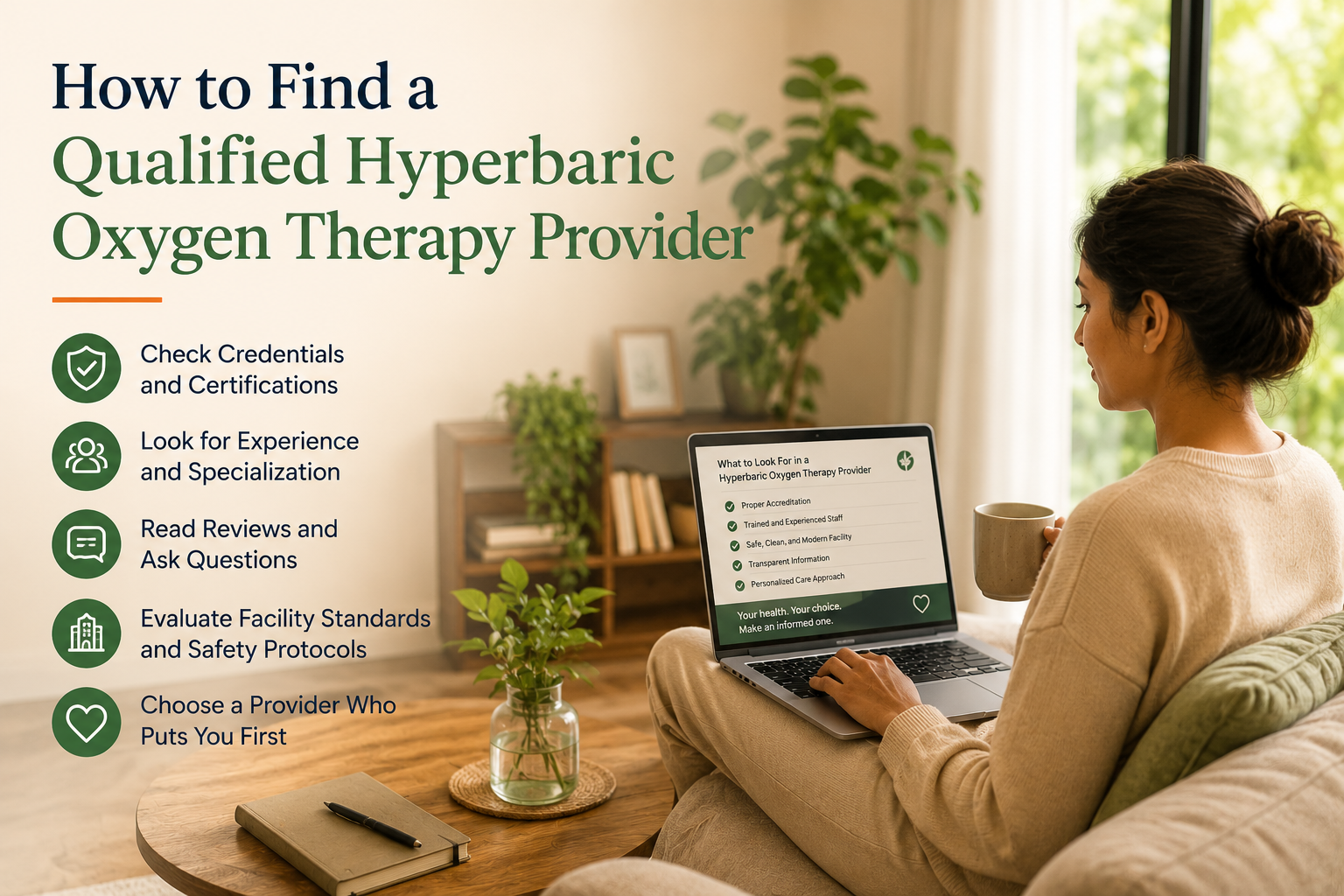
hbot near me india buyers guide 2026 — how to find qualified hyperbaric oxygen therapy provider
“If you have searched ‘HBOT near me’ in India, you have seen the problem — every result looks the same. This guide gives you what the search results do not.”
India’s HBOT market in 2026 is one of the most interesting and most complicated wellness markets in the world. The therapy is real. The science is solid. The market is growing rapidly. And the information gap between qualified and unqualified providers is still large enough that most buyers cannot tell the difference.
This post closes that gap. It is the most comprehensive HBOT buyer’s guide written specifically for the Indian market. It covers the complete standard, the full market context, a goal-specific decision matrix, a city-wise provider evaluation framework, and an honest assessment of where the market is going. Bookmark it. Share it. Use it every time.
“An informed buyer is the only quality mechanism that works before regulation arrives. You reading this — and using what you learn — is how the market gets better.”
The Complete Picture in Five Points
Before the detail, the summary. Five sentences that contain everything this series has established.
- Pressure is the mechanism. HBOT works through plasma oxygen dissolution — a process that activates meaningfully at 2.0 ATA with 100% pure oxygen. Sessions below this threshold cannot replicate the outcomes documented in peer-reviewed clinical research.
- Medical grade has a precise definition. A capable HBOT chamber must reach and sustain 2.0 ATA, deliver pure oxygen, hold structural certification, maintain active monitoring, and have a service infrastructure. Five criteria. All verifiable.
- India’s market has three provider categories. Hospital-based clinical units, dedicated wellness centres with hard chambers, and low-pressure wellness chambers. Only the first two deliver clinical-grade HBOT. All three use identical marketing language.
- Price signals capability. Sessions dramatically below ₹1,500 in India’s commercial wellness market almost always reflect a removed cost driver — oxygen delivery, pressure specification, or monitoring. The cheapest sessions produce the worst cost-effectiveness ratio when they do not activate the therapeutic mechanism.
- Eight questions verify everything. Before any booking or purchase decision, the eight-question checklist from Phase A will tell you which category a facility belongs to and whether their equipment meets the standard. Use it every time.
That is the framework. The rest of this post is the application guide.
The Full Machine Awareness Series — What Each Post Covers
The six posts in this series build sequentially. Each one answers a specific question the informed buyer needs to resolve before making a decision.
| Post | Title | What It Covers | Where to Find It |
| A1 | What Is a Medical-Grade HBOT Chamber | The five criteria that define a capable chamber. Pressure, oxygen delivery, certification, monitoring, service. | hbotlab.com/what-is-medical-grade-hbot-chamber/ |
| A2 | Why Pressure Is the Whole Point | Henry’s Law. 1.3 ATA vs 2.0 ATA plasma oxygen comparison. What the research actually required. | hbotlab.com/hyperbaric-oxygen-therapy-pressure-explained/ |
| A3 | The 8-Point Chamber Checklist | Eight verifiable questions. Six red flags. What a qualified facility looks and sounds like. | hbotlab.com/hbot-chamber-checklist-india/ |
| B4 | Why India’s HBOT Market Has a Pressure Problem | Regulatory gap. Three provider categories. Why the same language describes different products. | hbotlab.com/hbot-market-india-pressure-problem/ |
| B5 | Chamber Price in India: Why Cheap Costs More | Five cost drivers. True cost comparison. What fair pricing looks like city-wise. | hbotlab.com/hbot-cost-india-guide/ |
| B6 | The India HBOT Market Guide (This Post) | Full synthesis. How to find a qualified provider. What the market looks like now and where it is going. | hbotlab.com/hbot-market-india-buyers-guide/ |
What You Actually Need: The Goal-Based Decision Matrix
Different goals require different chamber specifications. The most common mistake Indian buyers make is choosing a facility based on proximity or price without matching the chamber’s capability to their specific therapeutic goal. This matrix does that matching for you.
| Your Goal | Pressure Required | Chamber Type Needed | What to Verify First |
| General wellness and mild recovery | 1.3–1.5 ATA adequate for basic wellness goals | Soft or hard chamber both applicable | Confirm oxygen delivery mode and session duration |
| Athletic recovery and performance | 1.5–2.0 ATA for anti-inflammatory and regenerative effects | Hard chamber preferred | Verify operating ATA and pure O₂ delivery |
| Longevity protocol (Efrati-style) | 2.0 ATA — non-negotiable for telomere and cellular outcomes | Hard chamber required | Confirm 2.0 ATA sustained for 90 min with pure O₂ |
| Post-concussion and TBI recovery | Minimum 1.5 ATA; 2.0 ATA for full neuroplasticity protocols | Hard chamber required | Verify pressure, O₂ delivery, session protocol, trained operator |
| Diabetic wound care and healing | 2.0–2.4 ATA for clinical wound healing evidence | Hard chamber, clinical setting preferred | Clinical oversight recommended; confirm equipment certification |
| Condition management (neurological, autoimmune) | 2.0 ATA for protocols with documented clinical evidence | Hard chamber required | Eight-question checklist; confirm protocol matches your condition |
The matrix is not exhaustive — conditions and protocols vary, and clinical guidance from a physician familiar with HBOT should be sought for complex conditions. But for the majority of buyers in India’s wellness and performance market, this framework covers the essential matching logic.
For the biology behind why each pressure threshold matters — why 1.5 ATA and 2.0 ATA produce different outcomes — see our detailed guide to hyperbaric oxygen therapy pressure explained.
How to Find a Qualified Provider in India’s Major Cities
There is no national registry of qualified HBOT providers in India. No certification database. No independently maintained quality standard. The eight-question verification framework is the only reliable tool available to buyers right now — and it works regardless of city.
What varies by city is the market composition: the ratio of qualified to unqualified providers, the typical price range for full-specification sessions, and the level of buyer sophistication in the local market.
Delhi NCR — The Largest and Most Developed Market
Delhi NCR has India’s most developed HBOT market — both hospital-based clinical units and dedicated wellness centres with hard chamber equipment. It also has a substantial low-pressure wellness chamber presence. The buyer has genuine choice in this market but needs the verification framework to exercise it effectively.
Full-specification sessions in Delhi NCR range from ₹2,500 to ₹4,500. For a detailed guide to evaluating providers in this market, see our complete HBOT guide for Delhi.
Bangalore — Fast-Growing, Diverse Quality
Bangalore’s wellness market has seen the fastest HBOT growth of any Indian city. The technology and startup culture has created a buyer base that is generally more research-literate — but the market has responded with both quality providers and a significant low-pressure chamber deployment. Full-specification sessions range from ₹2,200 to ₹4,000.
For Bangalore-specific provider guidance, see HBOTLAB Bangalore.
Mumbai — Premium Pricing, Variable Quality
Mumbai’s real estate costs push session prices upward across all categories — including low-pressure chambers. This makes price a less reliable signal in Mumbai than in other cities. A ₹2,500 session in Mumbai may reflect the same capability as a ₹1,200 session in a lower-cost city. Apply the eight questions with extra rigour in this market. Full-specification sessions range from ₹3,000 to ₹5,500.
Hyderabad and Chennai — Growing Markets, Emerging Quality
Both cities have growing HBOT presence with a mix of hospital-based units and wellness centre deployments. Qualified sessions typically range from ₹2,000 to ₹3,500. The market is less saturated than Delhi or Bangalore, which means less buyer choice but also potentially less low-pressure chamber noise. The verification framework applies equally.
| The Universal Rule | No matter which city you are in, the eight-question checklist produces the same result: a clear read on whether the facility you are considering operates a clinical-grade chamber or a wellness chamber. The city context tells you what to expect. The checklist tells you what you are actually getting. |
Evaluating a specific provider right now? If you are in the market, have a facility in mind, or have already received a quote or session recommendation — we can help you read it. Tell us your situation and we will give you a clear steer on whether the provider you are considering meets the standard.
How to Protect Yourself as a Buyer in an Unregulated Market
Regulation will come to India’s HBOT market. It has come to every market where the therapy has achieved mainstream adoption. But it has not come yet — and in the meantime, buyer verification is the only protection that works.
Step 1 — Know Your Goal Before You Search
The decision matrix above matches your goal to the pressure and chamber type required. Before you search for a facility, know what specification your goal requires. This prevents the most common mistake: choosing a convenient or affordable option that cannot deliver the outcome you are seeking.
Step 2 — Apply the Eight Questions Before Booking
The eight-question chamber checklist is the single most important tool in this series. Apply it to every facility you consider, before your first booking. The questions take two minutes to ask. The answers tell you everything you need to know about which category the provider falls into.
Step 3 — Read the Price Signal Correctly
As our analysis of why HBOT chamber pricing in India varies so dramatically explains, price in this market is a capability signal before it is a value signal. Sessions dramatically below ₹1,500 almost always reflect a removed cost driver. Use price as a first filter, then verify with the checklist.
Step 4 — Request a Trial Session Before Package Commitment
Any qualified facility will offer a trial session without hesitation. This gives you the opportunity to observe the equipment directly, verify the operator’s training through conversation, and confirm that the session experience is consistent with what you were told. Do not commit to a multi-session package before a trial session at a facility you have not previously used.
Step 5 — Match the Protocol to the Research
If you are pursuing HBOT for a specific condition or protocol — longevity, post-concussion recovery, diabetic wound healing — identify the research that describes that protocol and note the pressure, session duration, and session count it used. Then verify that the facility you are considering can deliver those exact parameters. If they cannot, they cannot replicate the research outcome, regardless of how compelling their marketing is.
Where India’s HBOT Market Is Going — and What It Means for Buyers
The trajectory of India’s HBOT market is upward across every dimension: awareness, demand, provider count, and — with a lag — quality standards. Understanding this trajectory helps buyers make decisions that hold value over time.
| Timeframe | What Is Likely to Change | What This Means for Buyers |
| 2026 — Now | No dedicated wellness HBOT regulation. Buyer verification is the only protection. Market growing faster than quality standards. | Apply the full Phase A framework before every booking. The checklist is your regulatory substitute. |
| 2027–2028 | First regulatory attention likely as market reaches mainstream adoption. Quality providers begin formal differentiation. Category language becomes more precise. | Early-mover buyers who understand the standard benefit most — before regulation forces clarity, informed buyers drive provider quality. |
| 2029 and beyond | Likely market consolidation. Clinical and wellness categories formally distinguished. Certification requirements for HBOT-marketed devices probable. | The buyers who developed evaluation literacy now will find the market much easier to navigate than late adopters who waited for regulation. |
The buyers who develop evaluation literacy now — who understand the standard, can apply the checklist, and can read a price signal — will always be better positioned than those who wait for the market to organise itself. The market will eventually organise. But the window for informed early adoption is now.
Frequently Asked Questions
1. Is HBOT safe for everyone?
2. How many sessions do I need?
3. Can I do HBOT at home?
4. Should I tell my doctor I am considering HBOT?
5. Is HBOT covered by insurance in India?
Phase B Complete — You Have Everything You Need
Six posts. Two phases. One complete framework for navigating India’s HBOT market as an informed buyer.
Phase A established the standard: what medical-grade means, why pressure is the mechanism, and how to verify it before committing.
Phase B explained the market: why the same language describes different products, why price varies so dramatically, and how to find a qualified provider across India’s major cities.
The HBOT opportunity in India is real. The science is solid. The market is growing. And the buyers who arrive informed — who know the five criteria, apply the eight questions, and read price signals correctly — will find qualified providers and receive the outcomes the research describes.
That is what this series was designed to deliver. Use it. Share it with anyone evaluating HBOT in India. The more informed buyers there are, the better this market gets.
| What Comes Next | Phase C of the Machine Awareness Series goes further — examining specific chamber specifications, what the research says about different HBOT delivery systems, and the harder questions about certification and quality standards in the Indian import market. Phase C is coming. Subscribe or bookmark this series to follow it. |
Ready to take the next step? If you are in the market for HBOT in India — whether evaluating a facility, considering a package, or wanting guidance on which protocol matches your goal — we are here. Tell us your situation and we will give you a clear, direct answer.


Subscribe
7 Comments
Comments are closed.
[…] For HBOT facility locations across India, see our guides to HBOT in Delhi and HBOT in Bangalore. For comprehensive facility guidance, see our HBOT near me India guide. […]
[…] For HBOT facility locations in India, see our guides to HBOT in Delhi and HBOT in Bangalore. For comprehensive facility guidance, see our HBOT near me India guide. […]
[…] For HBOT facilities near trauma centres in India, see our guides to HBOT in Delhi and HBOT in Bangalore. For a national access guide, visit our HBOT near me India guide. […]
[…] our guides to HBOT in Delhi and HBOT in Bangalore. For a complete national access guide, see our HBOT near me India guide. For insurance guidance, see our HBOT insurance India […]
[…] For HBOT locations in your city, see our guides to HBOT in Delhi and HBOT in Bangalore. For cost information, see our HBOT cost guide. For finding a qualified provider, see our HBOT near me India guide. […]
[…] India, see our guides to HBOT in Delhi and HBOT in Bangalore. For a national access guide, see our HBOT near me India guide. For insurance guidance, see our HBOT insurance India […]
[…] For HBOT facility locations in India, see our guides to HBOT in Delhi and HBOT in Bangalore. For a national access guide, see our HBOT near me India guide. […]