
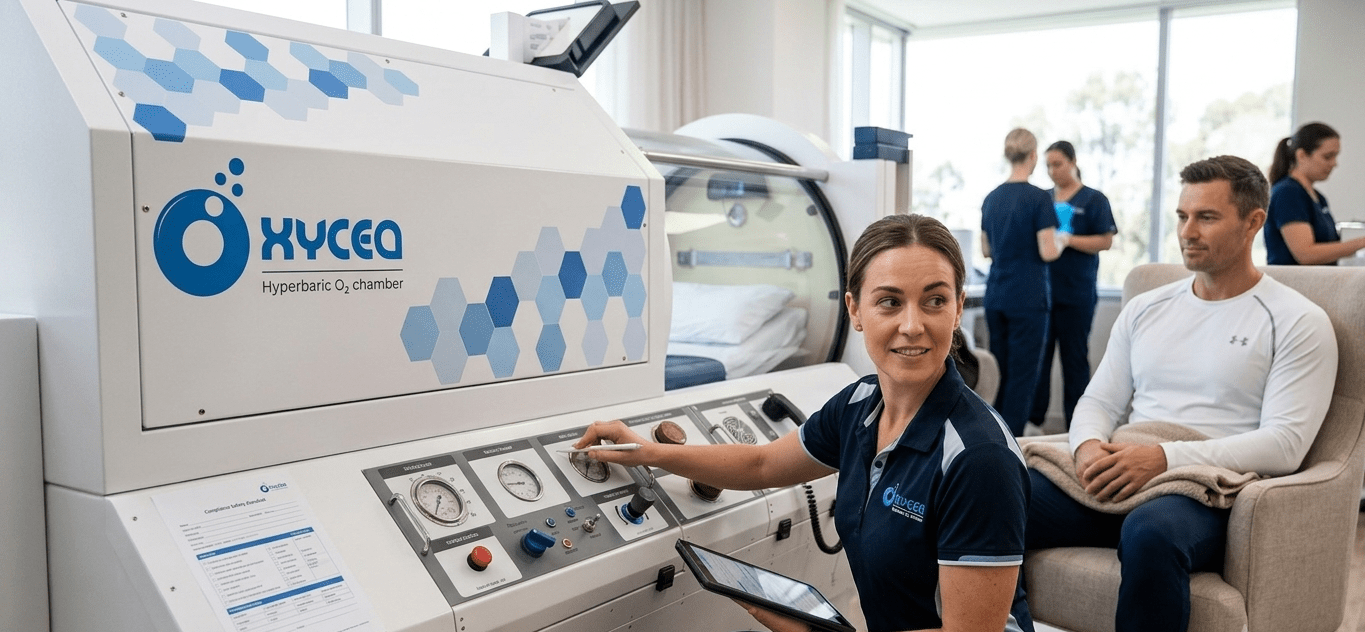
How Many HBOT Sessions Do You Need? Protocols & What to Expect
One of the first questions patients ask is: how many HBOT sessions will I need? The honest answer is that it depends on your goal and condition — a single session helps, but real change usually comes from a course. This guide explains typical session counts, how long each session lasts, and what to expect.
Tell us your condition and we’ll suggest a realistic session plan. Free, no obligation.
📞 Call +91 98219 94283💬 WhatsApp usBook consultation →What is hyperbaric oxygen therapy?
Hyperbaric oxygen therapy (HBOT) means breathing near-100% oxygen inside a pressurised chamber, usually around 2.0 ATA. At that pressure far more oxygen dissolves into the blood plasma and reaches tissues a normal breath cannot. For the full picture, see our hyperbaric oxygen therapy guide and hyperbaric chamber guide.
How many HBOT sessions do you need? Typical ranges
HBOT is a therapy that compounds over a course. The right number of HBOT sessions depends on what you are treating:
| Goal / condition | Typical sessions | Rough duration |
|---|---|---|
| Sports & injury recovery | 10–20 | 2–4 weeks |
| Non-healing / diabetic wounds | 20–40 | 4–8 weeks |
| Post-surgery healing support | 15–30 | 3–6 weeks |
| Radiation tissue injury | 20–40 | 4–8 weeks |
| Neurological support (adjunctive) | 20–60 | 6–16 weeks |
| Sudden hearing loss (with steroids) | 10–20 | 2–4 weeks |
| Skin, anti-ageing, wellness | 20–40 | 6–12 weeks |
These are general ranges from clinical use, not a prescription — your treating specialist and the hyperbaric team should design your protocol.
How long is one HBOT session, and how often?
A typical session runs about 60–90 minutes at target pressure, plus short pressurisation and depressurisation phases (around 10–15 minutes each). Courses are usually delivered daily or five days a week, because the benefits — such as new blood-vessel growth — build with repeated, closely spaced exposures.
What happens in a single session
- Check-in & brief review of how you are feeling that day.
- Pressurisation — a gentle increase in pressure; you feel mild ear fullness, like a flight, and use a simple equalising technique.
- Treatment — you rest and breathe normally for the prescribed time.
- Depressurisation — slow return to normal pressure. Most people go straight back to their day.
When will you notice results?
Session count and results timeline are related but not the same. For how soon benefits typically appear, see our dedicated guide: how long HBOT takes to work. As a rule, functional changes are reviewed around session 20.
Do you have to commit to a full course upfront?
No reputable centre should pressure you to. A sensible approach is to agree an initial block, set a clear review point, and continue only if you are seeing the benefit you came for. Package pricing often lowers the per-session cost — see our HBOT cost in India guide.
For more on safety, see is HBOT safe and HBOT side effects. Insist on a PVHO-certified hard chamber — see hard vs soft chamber — and find a centre via HBOT near me.
What changes how many sessions you need?
Several factors move the number up or down. Severity matters — a long-standing, non-healing wound usually needs more sessions than a minor recovery goal. How early you start can be decisive for time-critical conditions such as sudden hearing loss, where beginning within days changes the outlook. The chamber and pressure used affect the dose of oxygen delivered, which is one reason a PVHO-certified hard chamber is not interchangeable with a mild soft chamber. And individual response varies: two people with the same condition may progress differently, which is exactly why a good centre reviews your progress rather than selling a fixed package on day one. The takeaway is that any credible session count is a starting estimate, refined as your team sees how you respond.
It also helps to think in blocks. Rather than fixating on a single total, plan an initial block with a defined goal, reassess with objective measures, and decide together whether to continue. This keeps the plan honest and your spending proportionate to the benefit you actually see — and it fits how HBOT genuinely works, as a cumulative therapy whose gains are reviewed over time rather than promised in advance.
A quick word on consistency: HBOT works best when sessions are close together, so a course that is frequently interrupted may not deliver what a steady schedule would. When you plan, factor in travel, work and family so you can realistically attend the block you commit to. If life gets in the way, tell your centre — a good team would rather adjust the schedule sensibly than have you abandon a course halfway. Consistency, not heroics, is what lets the cumulative benefits of hyperbaric oxygen build.
Key takeaways
- Typical courses run 10–20 sessions for recovery, 20–40 for wound healing or wellness.
- Each session is about 60–90 minutes, usually daily or 5 days a week.
- Numbers are a starting estimate, refined as your team reviews progress.
- No reputable centre should pressure you into a full package on day one.
Frequently asked questions
How many HBOT sessions do you need?
It depends on the goal: often 10–20 sessions for recovery and 20–40 for wound healing or wellness, designed with your specialist. A single session helps, but real change comes from a course.
How long is one HBOT session?
About 60–90 minutes at target pressure, plus short pressurisation and depressurisation phases of roughly 10–15 minutes each.
How often are HBOT sessions done?
Usually daily or five days a week, because the benefits build with repeated, closely spaced sessions.
Do I have to book a full course upfront?
No. A sensible approach is an initial block with a clear review point, continuing only if you see benefit. Packages often reduce the per-session cost.
When will I see results from HBOT?
It varies by condition; functional changes are commonly reviewed around session 20. See our guide on how long HBOT takes to work.
Is more sessions always better?
No. The right number is matched to your condition and reviewed as you go, rather than simply maximised.
This page is for education and is not medical advice. Always consult a qualified clinician before starting HBOT.




Subscribe
One Comment
Comments are closed.
[…] The total number depends on the goal: often 10–20 sessions for injury or recovery support, 20–40 for wound healing, and longer courses for neurological work. See our detailed guide on how many HBOT sessions you need. […]