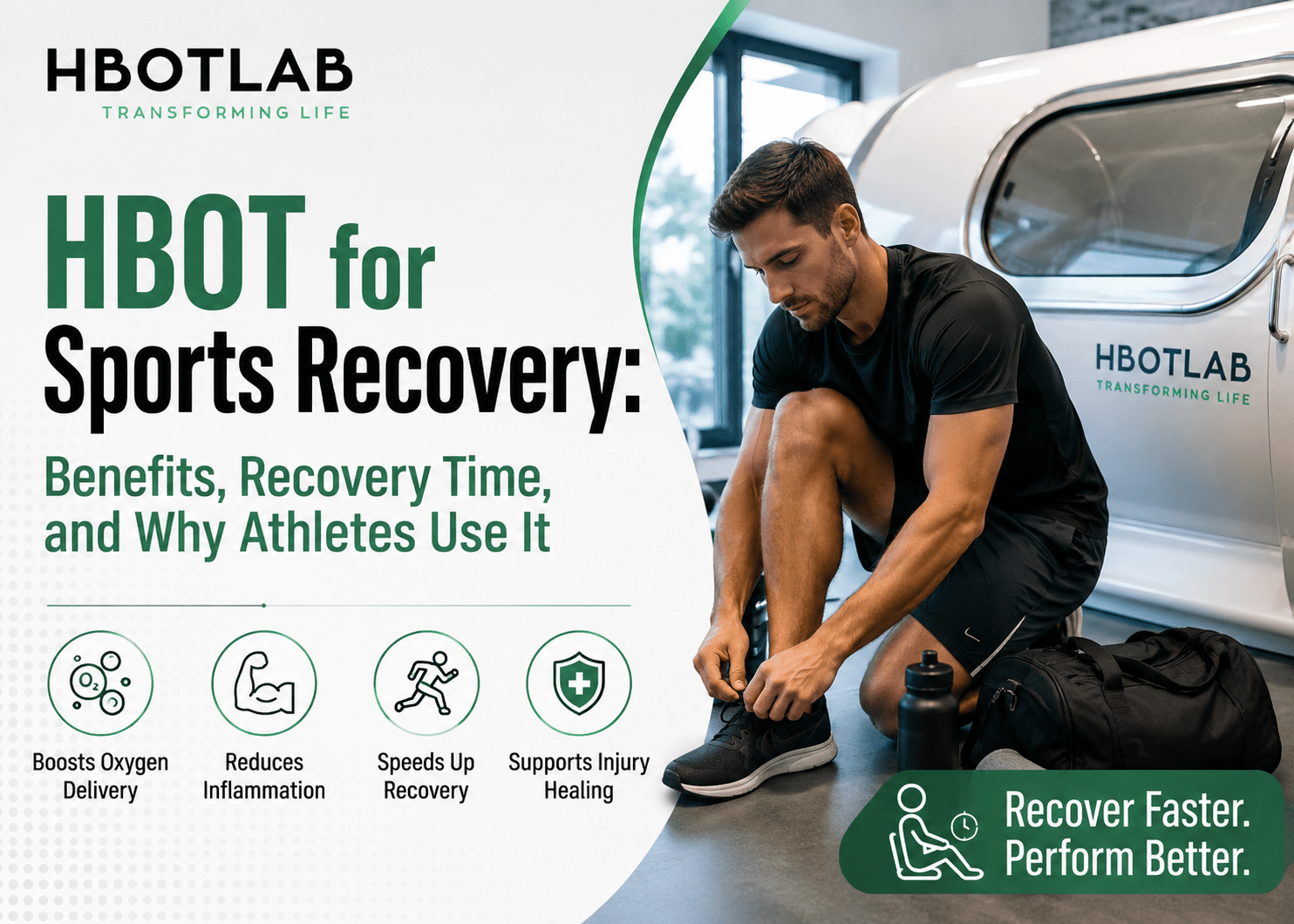
HBOT for Sports Recovery: Benefits, Recovery Time, and Why Athletes Use It
Athletes continuously push their bodies to the limit. Whether it is intense training sessions, competitive events, endurance sports, or strength-based activities, physical stress is an unavoidable part of athletic performance. While training helps build strength, speed, and endurance, recovery remains equally important. Without proper recovery, athletes face increased risks of fatigue, injury, inflammation, and reduced performance.
One recovery method that has gained significant attention among professional athletes, fitness enthusiasts, and sports medicine specialists is HBOT for Sports Recovery. Hyperbaric Oxygen Therapy (HBOT) is increasingly being incorporated into athletic recovery programs because of its potential to accelerate healing, support tissue repair, and help athletes return to peak performance more efficiently.
At HBOTLAB, we recognize the growing importance of advanced recovery solutions for athletes seeking safe, non-invasive methods to enhance healing and performance. Hyperbaric Oxygen Therapy has become a valuable addition to modern sports recovery protocols across multiple disciplines.
What Is Hyperbaric Oxygen Therapy?
Hyperbaric Oxygen Therapy is a medical treatment that involves breathing pure oxygen inside a specially designed pressurized chamber. During the session, atmospheric pressure is increased beyond normal levels, allowing the lungs to absorb significantly higher amounts of oxygen.
This oxygen-rich blood is then circulated throughout the body, reaching muscles, ligaments, tendons, joints, and tissues that may have been affected by strenuous activity or injury.
The enhanced oxygen delivery supports several natural healing processes, including:
- Tissue regeneration
- Reduction of inflammation
- Improved blood vessel formation
- Enhanced cellular repair
- Faster recovery from physical stress
- Support for muscle healing
These benefits make HBOT an appealing option for athletes seeking to optimize recovery and maintain consistent performance levels.
Why Recovery Matters for Athletes
Every workout creates microscopic damage within muscle fibers. This damage is a natural part of athletic adaptation, allowing muscles to rebuild stronger than before. However, the recovery phase determines how effectively the body repairs itself.
When recovery is insufficient, athletes may experience:
- Persistent muscle soreness
- Fatigue
- Reduced strength output
- Increased injury risk
- Longer healing times
- Decreased athletic performance
Proper recovery strategies help restore balance within the body, allowing athletes to train consistently while minimizing setbacks.
Hyperbaric Oxygen Therapy complements traditional recovery techniques by providing additional oxygen support to tissues that require repair.
How HBOT for Sports Recovery Works
The effectiveness of HBOT for Sports Recovery lies in the body’s increased oxygen availability.
During a treatment session:
- The athlete enters a pressurized chamber.
- Pure oxygen is delivered.
- Oxygen dissolves into the bloodstream at higher concentrations.
- Oxygen reaches damaged tissues more effectively.
- Cellular repair mechanisms become more active.
- Healing processes are supported throughout the body.
Oxygen plays a critical role in energy production and tissue repair. By increasing oxygen delivery beyond normal physiological levels, HBOT helps create conditions that support faster recovery from physical exertion and injury.
Key Benefits of HBOT for Sports Recovery
1. Accelerated Muscle Recovery
Intense workouts often leave athletes dealing with muscle fatigue and soreness. HBOT helps deliver oxygen to overworked muscles, supporting cellular repair and reducing recovery time.
Athletes frequently report feeling refreshed and better prepared for subsequent training sessions after incorporating HBOT into their recovery routine.
2. Reduced Inflammation
Inflammation is a natural response to physical stress and injury. While some inflammation is necessary for healing, excessive inflammation can delay recovery and contribute to discomfort.
HBOT may help regulate inflammatory responses by enhancing oxygen delivery to affected tissues. This can support healthier recovery and improved mobility.
3. Enhanced Tissue Repair
Muscles, tendons, ligaments, and connective tissues all require oxygen to heal effectively.
The increased oxygen concentration provided during Hyperbaric Oxygen Therapy supports:
- Collagen production
- Tissue regeneration
- Cellular repair
- Recovery from strains and sprains
This makes HBOT particularly valuable for athletes recovering from soft tissue injuries.
4. Improved Circulation
Healthy circulation ensures that nutrients and oxygen reach tissues efficiently.
HBOT can stimulate the formation of new blood vessels, a process known as angiogenesis. Improved circulation may support long-term healing and overall athletic recovery.
5. Reduced Muscle Fatigue
Athletes often experience accumulated fatigue following periods of intensive training.
By improving oxygen availability and supporting energy production at the cellular level, HBOT may help reduce fatigue and promote quicker recovery between workouts.
6. Faster Injury Recovery
Sports injuries can significantly disrupt training schedules and competitive goals.
HBOT is often used alongside rehabilitation programs to support recovery from:
- Muscle strains
- Ligament injuries
- Tendon injuries
- Joint inflammation
- Overuse injuries
Many athletes use HBOT as part of a broader treatment plan designed to help them return to activity safely and efficiently.
7. Support for Concussion Recovery
Contact sports sometimes expose athletes to head injuries and concussions.
Although treatment approaches vary depending on individual circumstances, HBOT has been explored as a supportive therapy for certain neurological recovery programs under medical supervision.
8. Better Athletic Consistency
Recovery is not only about healing injuries. It is also about maintaining consistent performance.
Athletes who recover effectively are often better positioned to:
- Maintain training intensity
- Reduce downtime
- Avoid overtraining
- Improve long-term performance outcomes
HBOT can contribute to a more structured recovery strategy that supports ongoing athletic development.
Common Sports Injuries That May Benefit from HBOT
Hyperbaric Oxygen Therapy is frequently considered for athletes dealing with various injuries, including:
Muscle Strains
Overstretched or torn muscles require oxygen-rich blood for efficient healing. HBOT helps support this process.
Ligament Sprains
Ligaments have limited blood supply compared to muscles. Enhanced oxygen delivery may assist recovery.
Tendon Injuries
Conditions such as tendonitis can be challenging to treat due to reduced circulation in tendon tissues.
Stress Fractures
Bone healing depends heavily on oxygen and nutrient delivery. HBOT may complement traditional treatment approaches.
Post-Surgical Recovery
Athletes recovering from orthopedic surgery often seek methods to support tissue healing and reduce recovery time.
Chronic Overuse Injuries
Repetitive movement injuries can benefit from therapies that support circulation and tissue repair.
Recovery Time: How Quickly Can Athletes See Results?
One of the most common questions regarding HBOT for Sports Recovery is how quickly results can be experienced.
The answer varies based on several factors:
- Type of injury
- Severity of tissue damage
- Athlete’s age
- Overall health
- Recovery goals
- Frequency of HBOT sessions
Recovery After Intense Training
Athletes using HBOT for post-workout recovery may notice benefits within a few sessions, including:
- Reduced soreness
- Improved energy levels
- Better recovery between workouts
Recovery from Minor Injuries
Mild strains and soft tissue injuries may show improvement within a few weeks when HBOT is combined with proper rehabilitation.
Recovery from Moderate Injuries
Athletes with ligament injuries, tendon problems, or stress-related conditions may require multiple sessions over several weeks.
Recovery from Major Injuries
More complex injuries and post-surgical recovery cases often involve extended treatment schedules developed in collaboration with healthcare professionals.
Recovery timelines differ significantly from one athlete to another, making personalized treatment planning essential.
Why Professional Athletes Use HBOT
Elite athletes constantly search for methods that help them recover efficiently and remain competitive.
Several factors contribute to the growing popularity of Hyperbaric Oxygen Therapy among professionals:
Maximizing Training Capacity
Faster recovery allows athletes to train more consistently and maintain higher workloads.
Reducing Downtime
Injuries and excessive fatigue can interrupt progress. HBOT helps support the body’s natural healing processes.
Maintaining Peak Performance
Athletes depend on physical readiness. Recovery strategies that enhance healing can contribute to sustained performance.
Supporting Long-Term Health
Repeated physical stress accumulates over time. Effective recovery methods help athletes protect their bodies throughout their careers.
Complementing Existing Recovery Programs
HBOT integrates well with:
- Physical therapy
- Sports massage
- Strength training
- Mobility work
- Nutrition programs
- Rehabilitation protocols
What Happens During an HBOT Session?
Many athletes are curious about what to expect during treatment.
A typical HBOT session generally includes:
Initial Assessment
Medical professionals evaluate the athlete’s needs and recovery goals.
Chamber Entry
The athlete enters a hyperbaric chamber designed to safely increase atmospheric pressure.
Oxygen Therapy
Pure oxygen is delivered while pressure gradually increases.
Relaxation Period
Most sessions allow athletes to relax, rest, or listen to entertainment while treatment is underway.
Completion
Pressure is gradually returned to normal levels before exiting the chamber.
Sessions commonly last between 60 and 90 minutes, depending on the treatment plan.
Is HBOT Safe for Athletes?
When administered by qualified professionals, Hyperbaric Oxygen Therapy is generally considered safe.
Athletes should always undergo proper screening before beginning treatment.
Potential temporary effects may include:
- Ear pressure similar to air travel
- Mild fatigue after treatment
- Temporary vision changes in rare cases
Professional supervision helps ensure a safe and effective experience.
HBOT and Athletic Performance
While recovery remains the primary focus, many athletes are interested in whether HBOT can support performance.
Recovery directly influences performance by allowing the body to:
- Repair damaged tissues
- Restore energy reserves
- Reduce inflammation
- Improve training consistency
Athletes who recover effectively are often able to perform at a higher level over extended periods.
HBOT should not be viewed as a substitute for training, nutrition, hydration, or rehabilitation. Instead, it serves as a supportive recovery tool within a broader athletic performance strategy.
Who Can Benefit from HBOT for Sports Recovery?
Hyperbaric Oxygen Therapy may be suitable for:
- Professional athletes
- Amateur athletes
- Endurance runners
- Cyclists
- Football players
- Swimmers
- Tennis players
- CrossFit participants
- Weightlifters
- Martial artists
- Recreational fitness enthusiasts
Anyone seeking enhanced recovery support may benefit from discussing HBOT options with qualified healthcare professionals.
Why Choose HBOTLAB?
At HBOTLAB, we focus on providing advanced Hyperbaric Oxygen Therapy solutions designed to support recovery, wellness, and performance goals.
Our approach emphasizes:
- Professional care
- Modern hyperbaric technology
- Athlete-focused recovery solutions
- Personalized treatment plans
- Comfortable treatment environments
Whether you are recovering from a demanding training cycle, managing a sports injury, or looking to optimize your recovery strategy, HBOTLAB is committed to helping athletes perform at their best.
Final Thoughts
Athletic success depends on more than hard work and dedication. Recovery plays a vital role in helping athletes stay healthy, avoid setbacks, and perform consistently. HBOT for Sports Recovery has emerged as a valuable option for individuals seeking enhanced healing, reduced inflammation, improved tissue repair, and faster recovery from physical stress.
By increasing oxygen delivery throughout the body, Hyperbaric Oxygen Therapy supports natural healing processes that are essential for athletic recovery. From post-workout muscle soreness to injury rehabilitation and performance maintenance, HBOT continues to gain recognition among athletes and sports medicine professionals alike.
For athletes looking to elevate their recovery strategy, HBOT offers a science-supported approach that complements training, rehabilitation, and long-term performance goals.
FAQs
How does HBOT help athletes recover faster?
HBOT increases oxygen delivery to muscles and tissues, helping repair cellular damage caused by intense training and sports injuries.
Can HBOT reduce muscle soreness after exercise?
Yes, many athletes use HBOT to help reduce post-workout muscle soreness and improve recovery between training sessions.
Is HBOT for Sports Recovery safe?
When administered by trained professionals, HBOT is generally considered safe and is widely used in medical and sports recovery settings.
How many HBOT sessions are needed for sports recovery?
The number of sessions depends on the athlete's goals, training intensity, and injury severity. Treatment plans are typically customized.
What are the main benefits of HBOT for sports recovery?
HBOT may help reduce inflammation, accelerate tissue healing, improve circulation, decrease muscle fatigue, and support faster recovery from injuries.
How long does recovery take with HBOT?
Recovery times vary depending on the condition being treated, overall health, and the number of therapy sessions completed.
Why do professional athletes use Hyperbaric Oxygen Therapy?
Professional athletes use HBOT to support recovery, reduce downtime from injuries, enhance training consistency, and maintain peak performance.
Can HBOT help with sports injuries?
HBOT is commonly used as a supportive therapy for muscle strains, tendon injuries, ligament sprains, stress fractures, and post-surgical recovery.
Who should consider HBOT for athletic recovery?
Professional athletes, amateur competitors, fitness enthusiasts, and individuals recovering from sports-related injuries may consider HBOT as part of their recovery program.