

Why Rishabh Pant Is Using Hyperbaric Oxygen Therapy for Sports Injuries — And What It Means for Every Indian Athlete
At twice normal atmospheric pressure, your blood carries oxygen to places it has never reached before. That is not a wellness claim. That is physics.
Hyperbaric oxygen therapy for sports injuries is not new. It has been used by elite athletes for over two decades.
Hyperbaric oxygen therapy (HBOT) is a treatment in which you breathe pure oxygen inside a pressurised chamber at 1.5 to 2.4 times normal atmospheric pressure. At that pressure, oxygen dissolves directly into blood plasma — reaching injured tissues that standard recovery cannot access. The result: faster cellular repair, reduced inflammation, and accelerated healing at the structural level.
Most recovery protocols work on the surface. Ice packs reduce swelling. Rest stops the damage. Physiotherapy rebuilds movement. None of them solve the core problem — the injured tissue is not getting enough oxygen to repair itself at the cellular level.
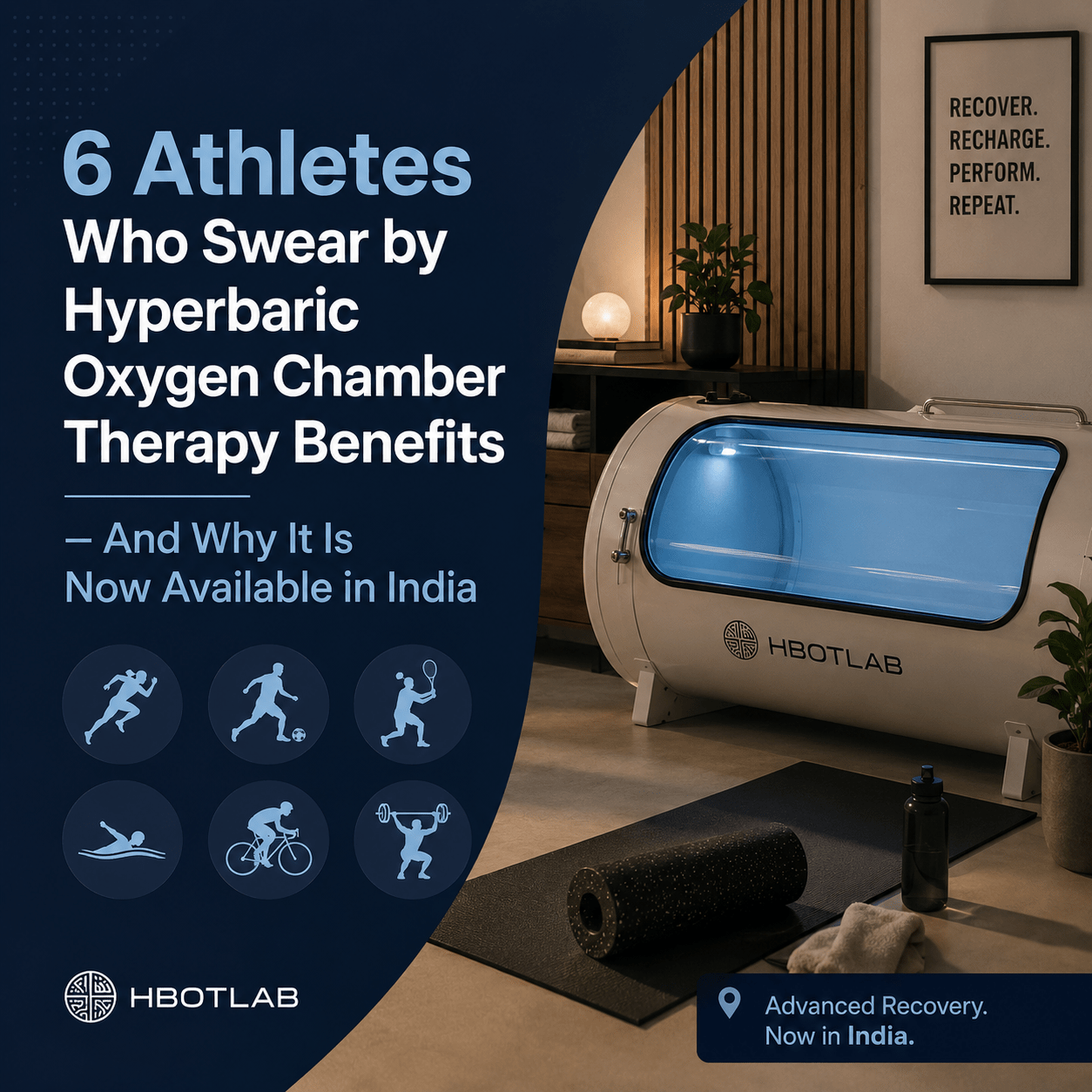
That is the problem HBOT is built to solve. It is why Novak Djokovic travels with a chamber worth ₹75,00,000. Why LeBron James has used it for over a decade. Why Cristiano Ronaldo has one installed at home. And most recently — why Rishabh Pant used it as a core part of his recovery programme ahead of IPL 2026.
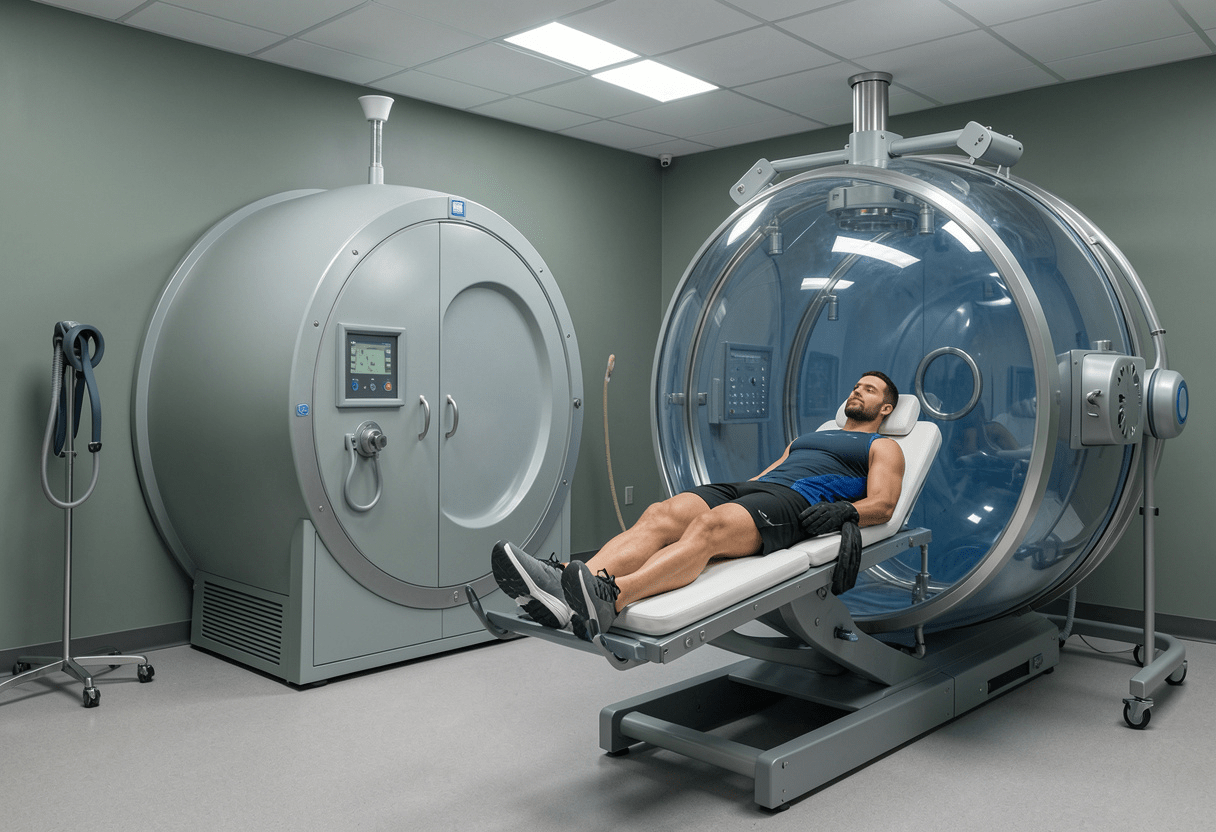
hyperbaric oxygen therapy for sports injuries — athlete inside HBOT chamber for recovery
How Hyperbaric Oxygen Therapy for Sports Injuries Actually Works
At sea level, blood plasma carries almost no oxygen — it relies entirely on red blood cells. At 2.0 ATA inside an HBOT chamber, plasma oxygen concentration increases by up to 20 times. That surge of oxygen dissolves into plasma and reaches tissues that have lost their blood supply due to injury, inflammation, or surgical trauma.
Four simultaneous biological processes are triggered:
- Angiogenesis — new blood vessel growth. Injured tissue loses its blood supply, starving itself of the nutrients needed to heal. HBOT stimulates formation of new capillaries into damaged areas, permanently restoring oxygen and nutrient delivery.
- Stem cell mobilisation. Research by Thom SR et al. (2006, American Journal of Physiology) demonstrated that HBOT doubles circulating stem cell counts after just one session. These stem cells migrate directly to damaged tissue — ligament, tendon, bone — and drive structural repair.
- Faster muscle regeneration. A 2018 Scientific Reports study (Oyaizu et al.) found HBOT activates macrophages and satellite cells — the two primary drivers of muscle fibre regeneration — significantly faster than standard recovery.
- Inflammation control. HBOT modulates inflammatory cytokines — specifically TNF-α and IL-6 — reducing chronic inflammation without suppressing the initial healing response that the body needs.
From Djokovic to LeBron to Pant: Who Uses HBOT and Why
Novak Djokovic brought a portable HBOT chamber to the US Open for in-tournament recovery. LeBron James has used HBOT as a core pillar of a protocol that has extended his career into his forties. Cristiano Ronaldo has a chamber installed at home. NFL players, Olympic swimmers, and Premier League footballers use it as a standard post-match protocol.
In Indian cricket, Rishabh Pant incorporated HBOT into his recovery programme ahead of IPL 2026 — working back from the catastrophic injuries sustained in his December 2022 road accident: ligament tears, a fractured heel, and severe injuries that required intensive, multi-year rehabilitation.
In Indian entertainment, actor Samantha Ruth Prabhu used HBOT as part of her treatment for myositis — an autoimmune inflammatory condition — and spoke openly about the role it played in her recovery. Tiger Shroff has used it during physically demanding film schedules to accelerate muscle repair between shoots.
Pant’s recovery has been widely reported. According to Bold News, he started HBOT at the BCCI Centre of Excellence in Bengaluru to speed up his recovery ahead of the IPL 2026 season — a publicly documented use of the therapy at the highest level of Indian sport.
What the Research Says: The Science Behind HBOT and Injury Recovery
The evidence base for HBOT in sports recovery is substantial. Three areas are directly relevant for athletes:
Ligament and tendon healing
Ligaments and tendons are slow to heal because they have poor blood supply. HBOT drives oxygen into hypoxic (oxygen-depleted) tissue via plasma dissolution, bypassing the compromised vascular supply. Studies on peripheral nerve regeneration (Nazario and Kuffler, 2011, Undersea and Hyperbaric Medicine) found that HBOT promoted nerve fibre regrowth — directly relevant to joint and connective tissue injuries.
Bone fracture recovery
Bhutani and Vishwanath (Indian Journal of Plastic Surgery, 2012) documented HBOT’s role in enhancing bone and tissue repair through increased collagen synthesis and angiogenesis. For a heel fracture like Pant’s, these are the precise biological processes that determine recovery speed.
Concussion and brain injury recovery
Boussi-Gross et al. (PLoS One, 2013) conducted a randomised prospective trial showing that HBOT can improve post-concussion syndrome years after mild TBI. For contact sport athletes — cricketers, footballers, combat athletes — this is a clinically significant finding.
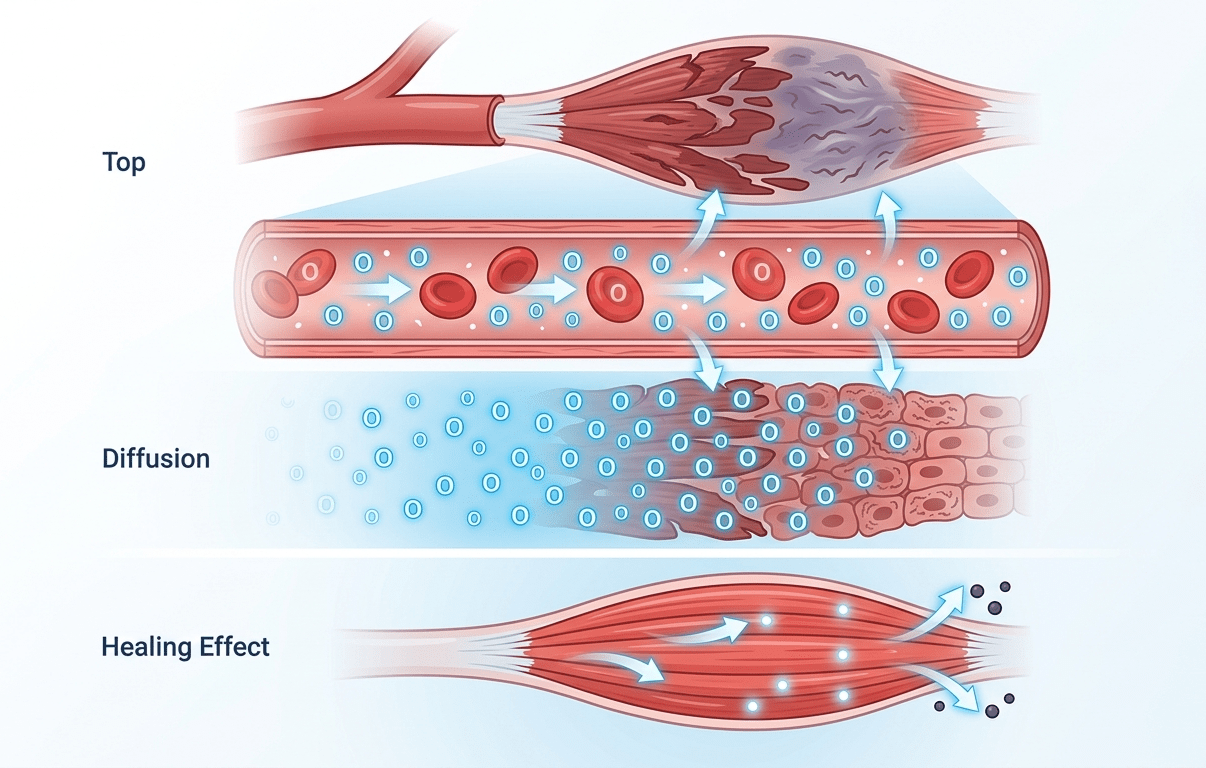
hyperbaric oxygen therapy for sports injuries — how HBOT accelerates healing at the cellular level
What Pant’s HBOT Recovery Means for Indian Athletes
For years, HBOT in India was accessible only in medical settings — hospital chambers used for clinical indications like diabetic wound care and decompression sickness. The technology existed. The access did not.
That is changing. Dedicated wellness HBOT centres are now operating in Delhi, Mumbai, Bangalore, Hyderabad, and Chennai. Sports academies, fitness centres, and rehabilitation clinics are beginning to integrate HBOT as a standard recovery protocol — bringing to Indian athletes what has long been available only at BCCI and elite club facilities.
If you are managing a ligament injury, recovering from a fracture, dealing with chronic muscle inflammation, or trying to recover faster between training sessions — the same mechanism working for Pant is now available to you.
For a full breakdown of how the therapy applies to different injury types, read our complete guide on HBOT for sports injuries and recovery.
How Many Sessions Does a Sports Injury Require?
There is no single protocol that fits all injuries. Session count depends on the injury type, severity, and recovery stage. These are the general frameworks used by sports medicine practitioners:
| Injury Type | Sessions | Primary Goal |
|---|---|---|
| Muscle tear / strain | 10–20 | Accelerate fibre regeneration |
| Ligament / tendon injury | 20–40 | Restore structural integrity |
| Bone fracture recovery | 20–40 | Support collagen synthesis |
| Chronic inflammation | 15–25 | Modulate inflammatory response |
| Concussion / mild TBI | 40 | Neuroplasticity and recovery |
| Post-surgery recovery | 20–40 | Wound healing and tissue repair |
Sessions typically run five days a week for three to eight weeks, with each session lasting 60 to 90 minutes. Results are cumulative — the biological processes continue working between sessions and for weeks after the protocol ends.
Frequently Asked Questions About HBOT for Sports Recovery
Is HBOT safe for athletes?
Yes — when conducted in a properly certified facility under appropriate supervision. HBOT is one of the most extensively studied recovery modalities in sports medicine. The main risks (ear pressure discomfort, temporary myopia) are mild and reversible. Serious adverse effects are extremely rare when safety protocols are followed.
How many HBOT sessions are needed for sports recovery?
This depends on the injury. Muscle strains typically respond in 10–20 sessions. Ligament and bone injuries generally require 20–40 sessions. Neurological recovery (concussion, mild TBI) may need 40 or more sessions. A qualified practitioner should assess your specific injury before recommending a protocol.
What does HBOT cost in India per session?
Session costs in India range from approximately ₹3,500 to ₹10,000 depending on the city, facility, and chamber type. Delhi and Mumbai typically sit at the higher end. Many facilities offer package rates that reduce the per-session cost significantly for longer protocols.
Can HBOT help with ligament injuries?
Research strongly supports HBOT’s role in connective tissue repair. Ligaments and tendons have poor natural blood supply, making them slow to heal through conventional rest alone. HBOT delivers oxygen directly to these hypoxic tissues via plasma dissolution, stimulating collagen synthesis and new blood vessel growth.
Can HBOT be used alongside physiotherapy?
Yes. HBOT is most effective as part of a comprehensive recovery programme alongside physiotherapy, nutritional support, and appropriate rest. It does not replace other interventions — it enhances the cellular conditions that make every other intervention work better.
The Oxygen Advantage
Recovery is not passive. Every hour your injured tissue spends in an oxygen-depleted state is an hour of repair that does not happen. HBOT changes that equation — not by overwhelming the body, but by giving it precisely what it needs to do what it is already trying to do.
Djokovic understood it. LeBron understood it. Pant has now demonstrated it on one of the most high-stakes sporting comebacks in Indian cricket history.
When you are ready to understand what your body is capable of —
Also read: HBOT benefits — what to know before your first session



6 Comments
Comments are closed.
[…] heel, and years of rehabilitation. His use of the therapy was widely reported. Read more about how Rishabh Pant used HBOT for his IPL 2026 comeback and the science behind his […]
[…] level, the therapy has been validated by adoption at the highest tier of sport. Read more about how elite athletes use HBOT for recovery and the science behind the […]
[…] level, the adoption by athletes like Samantha Ruth Prabhu and Tiger Shroff in Mumbai, and how elite athletes use HBOT for injury recovery at the highest competitive levels, signals a therapy that has moved well beyond […]
[…] 2018) documented significantly faster muscle regeneration via HBOT. Read the full breakdown of how elite athletes use HBOT for recovery and what the evidence […]
[…] those considering HBOT for recovery and performance, read HBOT for recovery and what the clinical and performance evidence […]
[…] injury recovery for this reason. For the sports science behind HBOT recovery, see our guide to HBOT for sports recovery and the evidence on HBOT for fibromyalgia and chronic fatigue — both illustrating how oxygen […]